
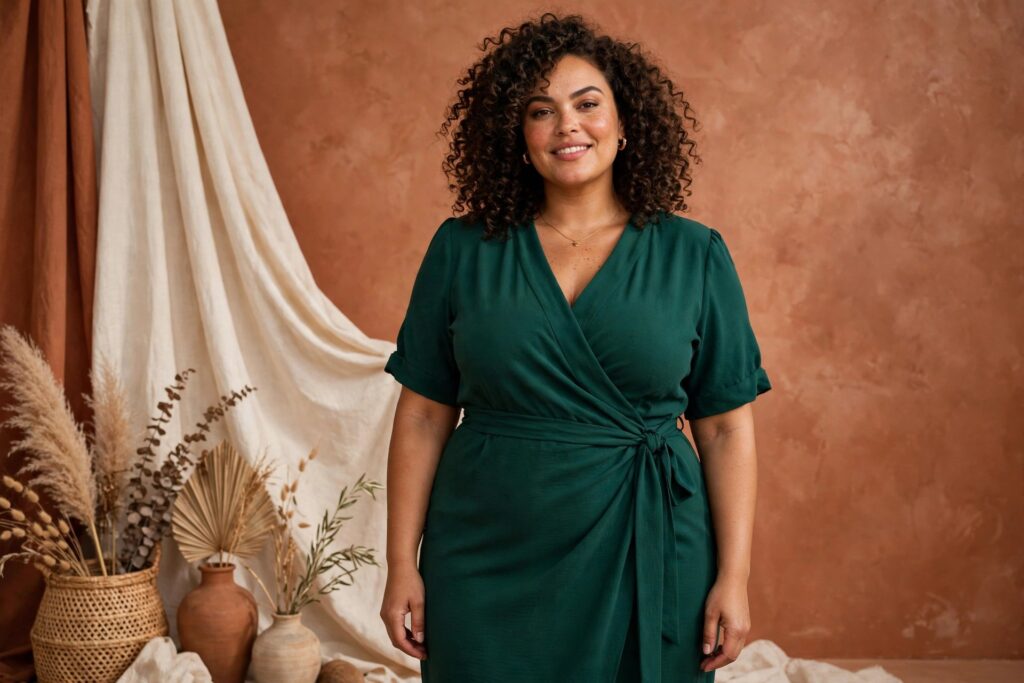
A good plus-size wrap dress should overlap generously at the bust, tie at your true waist without riding up, and stay closed when you sit, walk, and reach. This guide walks through the fit checks, fabrics, and tie placements that stop gapping before it starts.
How a wrap dress actually works
Forget the product photos for a second. A wrap dress is really just two front panels, one belt, and your body doing the tailoring. One panel crosses over the other, the tie pulls everything snug at the waist, and friction plus overlap do the rest of the work.
That sounds simple. And it is, until one part is off. If the overlap is too shallow, the neckline opens every time you lean forward. If the tie sits in the wrong spot, the skirt pulls sideways and the whole front starts to creep. If the fabric is too slick or too light, the panels slide against each other instead of staying put.
Here’s the good news. None of that means wrap dresses aren’t for curvier bodies. It usually means the dress was cut for a straighter frame and simply scaled up, with the same shallow overlap and the same tie height. A well-cut plus-size wrap dress adds depth where you need it. More fabric across the bust. A longer tie. A waist seam that actually lands at a real waist. Once you know what to look for, you can spot the difference fast — in a fitting room, or from a size chart at home.
Three wrap styles, side by side
Not every dress sold as a wrap actually wraps. Some tie. Some just cross in front and get sewn shut. The label on the product page won’t always tell you which one you’re getting, so check the description for words like “functional tie,” “fully opening front,” or “faux wrap.” Your bust, your plans for the day, and your tolerance for adjusting your clothes all point to a different best pick.
| Style | Closure | Adjustability | Gapping risk | Best for |
|---|---|---|---|---|
| True wrap | Two panels + waist tie, front fully opens | Highest — you set the fit every wear | Medium — depends on overlap and tie placement | Changing bodies, long days, anyone who wants one dress to fit across sizes |
| Faux wrap | Cross-front bodice sewn closed, pull-on style | Lowest — fit is fixed at the factory | Low at the skirt, medium at the neckline | Busy mornings, travel, anyone who hates fussing with ties |
| Surplice | Diagonal cross-front, often with a gathered or fixed waist | Low to medium — some styles add a side tie | Medium at the bust if the neckline is cut deep | Evening looks, smaller busts on a curvy frame, dressier fabrics |
Read that table like a shopper, not a textbook. Want a dress that forgives a big lunch, a bloated day, or a few pounds in either direction? True wrap, every time. Want to throw something on and not think about it again until you take it off? Faux wrap earns its keep. Love the wrap look for a night out but don’t want to manage a tie in a dim restaurant? Surplice gives you the lines without the homework.
One catch with faux wraps. Because the front is sewn, the maker decides exactly how much coverage you get. If you’re fuller in the bust than the brand’s fit model, that fixed neckline can sit lower and tighter than the photos suggest. Check the return policy before you commit, and size for your bust first, not your waist.
Fabric weight and drape: the quiet fix for gapping
Fabric does more for a wrap dress than any snap or pin ever will. A mid-weight knit with a bit of body — think ponte, a sturdy matte jersey, or a crepe with some heft — holds its line. It crosses, it stays crossed, and it skims instead of clinging to every seam underneath.
Very light fabrics cause most of the drama. A thin, floaty rayon or a silky polyester charmeuse looks gorgeous on a hanger. On a moving body? The panels flutter, the tie slips, and the neckline migrates. Save those fabrics for faux wraps where the front is sewn shut, or plan on a slip and a camisole doing backup duty.
Stretch helps, but only the right kind
A little elastane — often listed as spandex or Lycra on the label — lets the bodice settle over curves instead of fighting them. Two-way stretch across the bust is your friend. Super-stretchy, thin jersey is not. It stretches out under the weight of a fuller bust by midday, and a stretched neckline is a gaping neckline.
Try this in the store. Pinch the fabric at the bust and pull gently. Does it snap back, or stay baggy? Snap-back wins. Hold a single layer up to the light, too. If you can see your hand through it, expect to layer.
Bust fit checks that stop gapping
Most gapping starts at the bust, so start your checks there. Do them in order, in front of a mirror, wearing the bra you’d actually wear with the dress. A different bra can change your bust height enough to change how the neckline lands.
Check one: the overlap
Tie the dress the way you’d wear it out the door. Now look down. The under-panel should reach well past your centre line — as a working guide, aim for at least four to six inches of overlap across the bust for a true wrap. Less than that, and everyday movement eats the margin fast. Reaching for a top shelf shouldn’t feel like a risk assessment.
No ruler handy? Use your hand. Lay it flat across your chest, fingers spread. If the top panel’s edge lands somewhere under your palm instead of past it, the overlap is probably too shallow for a full day of wear.
Check two: sit, reach, bend
Don’t judge a wrap dress standing still. Sit down and cross your legs. Reach up like you’re grabbing a train strap. Bend forward like you’re picking up a bag. That’s your real life, compressed into twenty seconds.
Watch the neckline during each move, not after it. A good overlap shifts a little and settles back. A shallow one opens, stays open, and needs a tug. If you have to tug after every move, the dress will ask that of you all day long. Believe it the first time.
Check three: neckline depth and edge finish
A wrap neckline should end where you want eyes to stop, not where gravity decides. Depth plus shallow overlap is the classic gapping combo. Look for a finished edge — a banded trim, a lined bodice, or elastic stitched into the edge. Those details keep the line lying flat instead of curling away from your chest.
Got a dress you already love that sits just a touch too low? A small snap or hook-and-eye stitched at the point where the panels cross can close the gap without changing the look. Place it after you’ve tied the dress, not before, so it lands exactly where your body needs it.

Waist tie placement makes or breaks the fit
Ask anyone who swears wrap dresses don’t work for them, and the tie is usually the culprit. Not the idea of the dress. Just a belt hole in the wrong place, or a tie that’s too short to do its job properly.
Find your true waist first
Your true waist isn’t where your jeans sit. Bend sideways like you’re doing a gentle side stretch. The crease that forms? That’s it — for most people, the narrowest point of the torso, often higher than expected. A wrap dress looks and behaves best when the tie cinches right there. It defines your shape, it anchors the skirt, and it keeps the bodice panels from drifting.
If a dress ties well below that crease, the fabric above the tie has nothing holding it. It pools, it sags, it gaps. Check where the belt hole or loop sits before you blame your shape — plenty of dresses are simply cut with the tie too low.
Tie length and the side-hole test
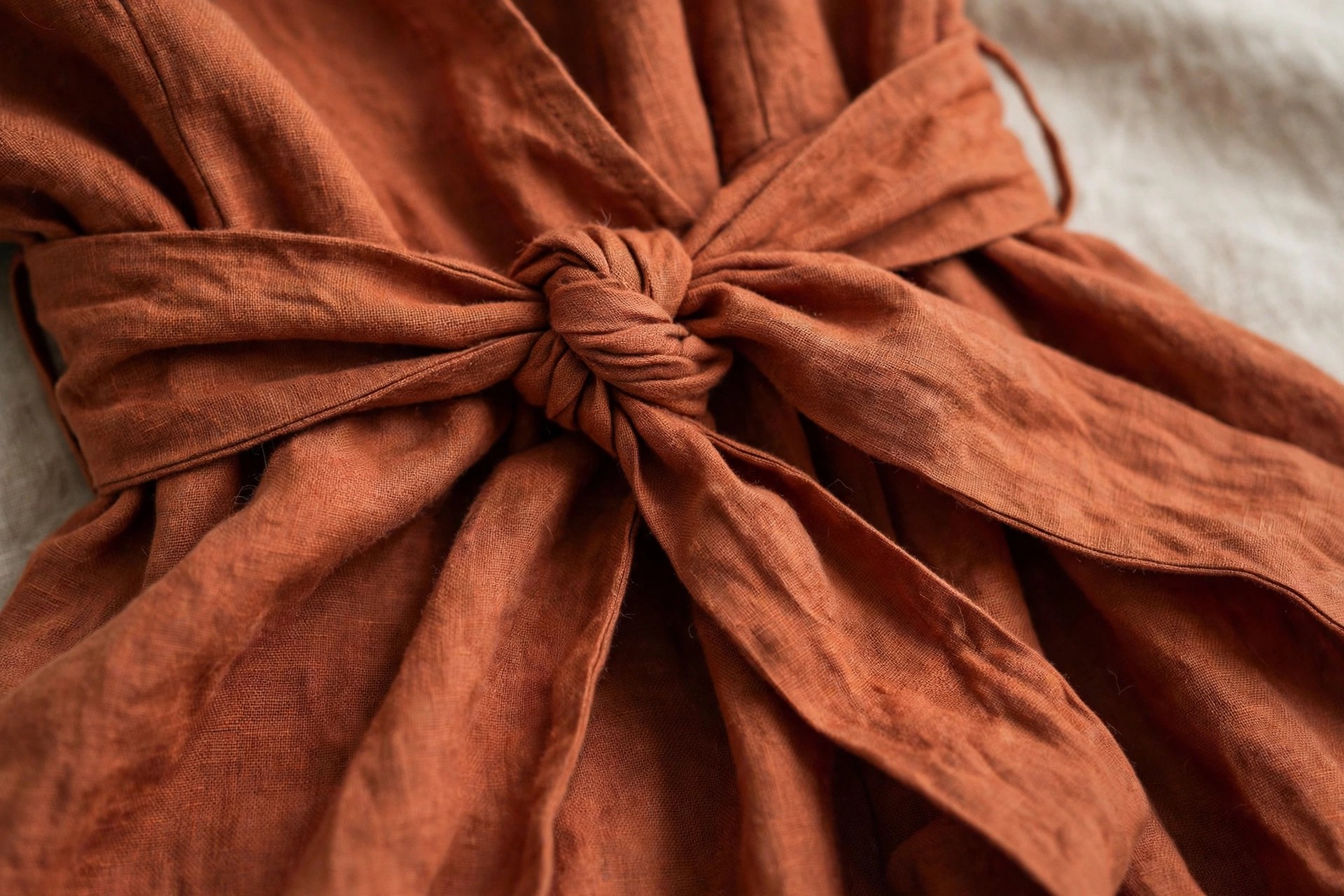
On a true wrap, one side of the tie threads through a small hole or loop at the side seam. That little hole matters. It should sit right at your waist, not two inches below it, and the tie should wrap around your back and return to the front with enough length for a firm bow or knot — you want tails you can actually grip, not nubs.
Short ties are a quiet quality tell. Brands that skimp there often skimped on overlap too. Wide ties spread pressure, so they don’t dig in after lunch the way skinny ties do.
Knot, bow, or tucked?
How you finish the tie changes the fit through the day. A bow at the side reads soft and pretty, and it’s easy to re-tie after a meal. A flat knot at the back keeps the front clean under a blazer. Tucking the tails gives the sleekest finish for evening, but check the tuck after you sit down — tucked tails love to escape.
Slips, camisoles, and layering without the bulk
Layering gets a bad reputation, as if needing a camisole means the dress failed. Flip that thinking. A thin layer underneath buys you coverage and confidence, and lets you wear lighter fabrics and deeper necklines on your own terms.
Start with the camisole. A fitted cami in a smooth, stretchy fabric adds a safety margin at the neckline and stops panels sticking to skin on warm days. Match it to the dress for a seamless look, or let a lace-trimmed edge show — that reads intentional, not accidental. Tuck it in so it can’t ride up under the tie.
When a slip earns its place
A half slip helps when the skirt is unlined, slightly sheer, or prone to clinging and static. It lets the skirt panels glide over each other, which matters more than you’d think — a clingy skirt tugs the bodice sideways every time you walk. Full slips work under faux wraps and surplice styles. Under a true wrap, a half slip is easier, since a full slip’s bodice can fight with the wrap panels.
Shapewear, kept in perspective
You don’t need shapewear to wear a wrap dress. Full stop. If you like a smoother line under a clingy knit, a light, breathable piece can help the fabric skim. But go light. Heavy compression under a tie-waist dress can push softness up and create a bulge right where the tie cinches — the opposite of what you were after. If you can’t take a deep breath and sit through a meal happily, the outfit isn’t finished, no matter how it looks standing up.
Sizing between brands: why your usual size lies
Plus-size sizing is famously inconsistent. One brand’s 18W fits like another’s 22W. With wrap dresses, that works in your favour — the tie gives you adjustment room a zip never will. You still need to start from the right size, though.
Measure for the wrap, not the label
Take three measurements with a soft tape, over the bra you’d wear with the dress. Fullest point of your bust. Your true waist at that side-bend crease. Your hips at their fullest. Then shop the size chart, not the number on your favourite jeans. For wrap dresses, fit your bust first. A wrap can forgive a roomy hip and adjust at the waist, but it can’t invent overlap at the bust that the pattern never included.
Between sizes? Size up and let the tie do its work. A size up gives you deeper overlap and a longer tie — the two things that stop gapping. A size down gives you a neckline you’ll be guarding all day. There’s no contest.
Reading product pages like a detective
Good product pages quietly tell you the truth. Look for the model’s size and height in the photo credits. Check whether reviews mention the tie length or the neckline, not just “so flattering!” Search the description for “lined bodice,” “functional wrap,” and fabric weight words like ponte or crepe. And check the return policy before checkout, every time. A generous returns window is a fit tool. Use it without guilt.
Styling one wrap dress three ways
Same dress, different shoes, different top layer, completely different read. Here’s how to stretch one good dress across your week.
For work
Start with a knee-length or midi wrap in a solid or small print — navy, burgundy, deep green. Add a structured blazer for formal offices, or a fine-knit cardigan for softer dress codes. Keep jewellery simple: studs or small hoops, a watch, done. Run the bust checks seated, at desk height, before the first wear. Office gapping happens reaching for a keyboard, not standing at the mirror.
For evening
Evening is where the wrap dress shows off. A black or jewel-tone wrap with a bit of sheen, a strappier shoe, and one bold piece of jewellery takes it out after dark. The snap trick earns its keep here, since evening necklines sit deeper. Swap the bow for a flat knot or tucked tails, carry the lipstick, done.

For the weekend
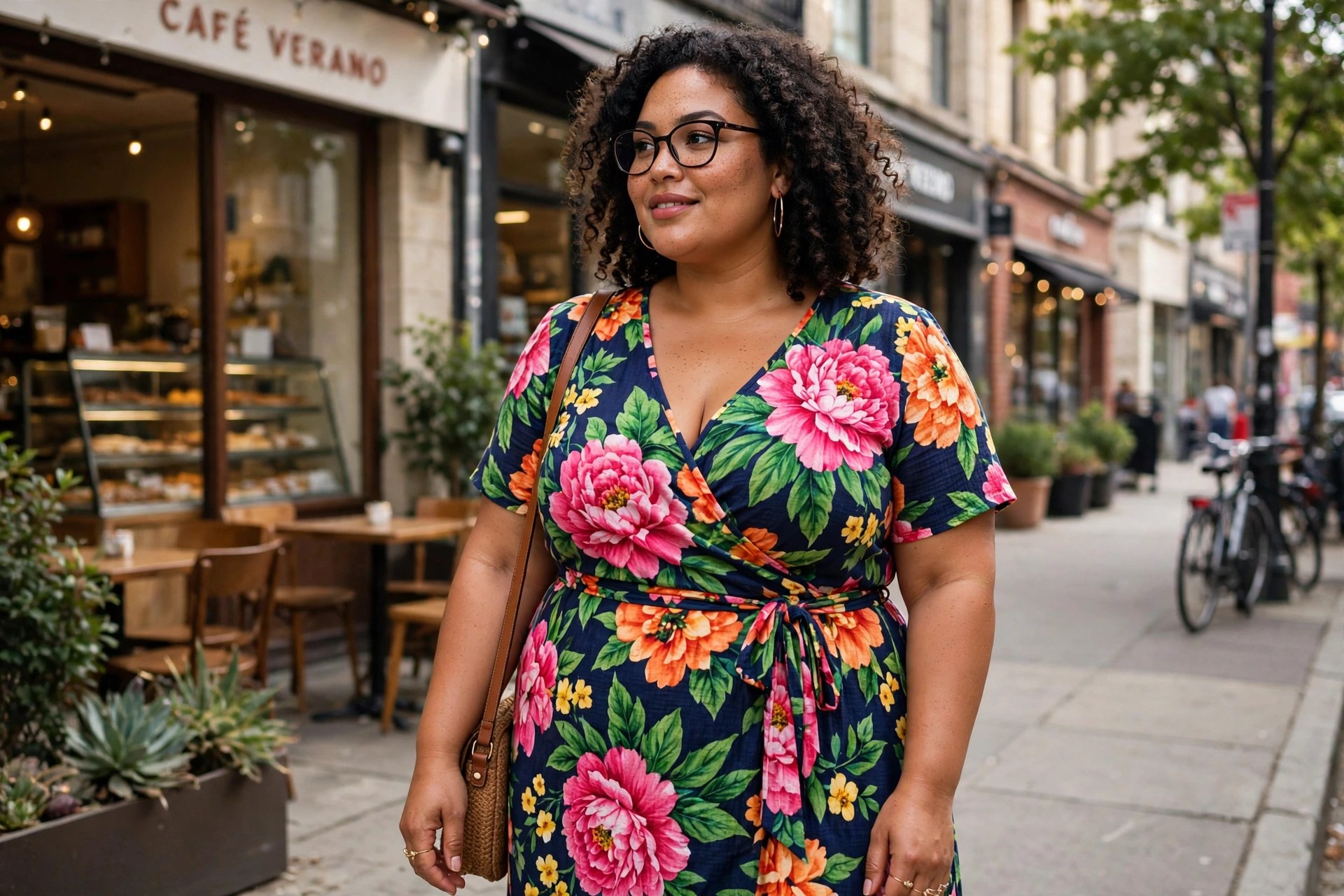
Weekends want ease. A floral or denim-look wrap with white trainers or flat sandals and a crossbody bag does Saturday properly. Tie the bow a touch looser than you would for work — weekend fit should feel like a deep breath. Cotton-blend and jersey wraps shine here. They move, they wash well, and they don’t ask you to think about them.
Care that keeps the wrap wrapping
A wrap dress lives or dies by its fabric and its tie, so care is really fit insurance. Check the label first — knits, crepes, and rayons all want slightly different handling — but a few habits protect almost every wrap dress you own.
Wash knits cool and gentle, and skip the tumble dryer when you can. Heat relaxes elastic fibres over time, and relaxed fibres mean a neckline that gives up fast. Hang the dress by the waist, folded over a hanger bar — hanging a wet knit by its shoulders stretches the bodice.
Store ties untied. A tie left knotted for weeks takes a set and stops lying flat. A quick steam usually sorts a wrinkled tie; low-heat ironing works too, if you keep the iron moving.
Finally, give the dress a ten-second check as you put it away. Tie firmly stitched? Side loop holding? Snap still secure? Two minutes with a needle at home beats discovering it at a wedding.
Bottom line
A plus-size wrap dress that gaps isn’t a verdict on your body. It’s a checklist with a few boxes unticked. Deep overlap at the bust — four to six inches as your guide. A tie that’s long, wide, and cinched at your true waist. Fabric with enough weight to hold its line, sized for your bust first, and layered with a cami or half slip when the day calls for backup.
Run the checks in order: overlap, sit-and-reach, neckline edge, tie placement. They take a minute in a fitting room and save you a day of tugging, pinning, and second-guessing. Pick the wrap style that suits your plans — true wrap for adjustability, faux wrap for zero fuss, surplice for dressier nights — and let the dress do the adjusting for once.
You deserve clothes that fit the day you’re actually living. Choose well, and a wrap dress becomes one of the hardest-working pieces you own.