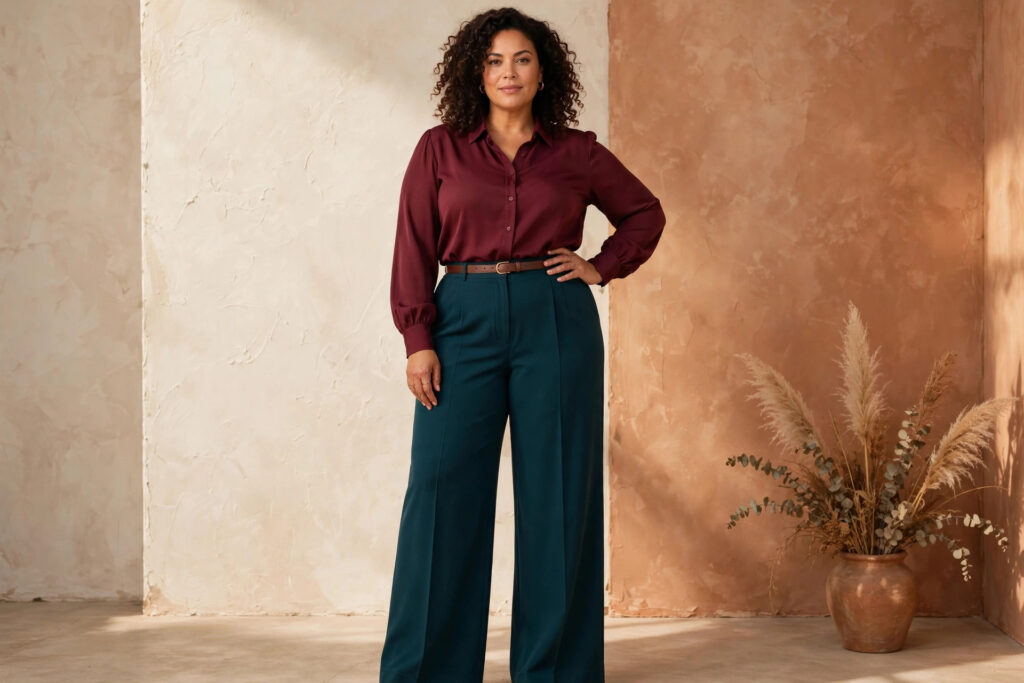
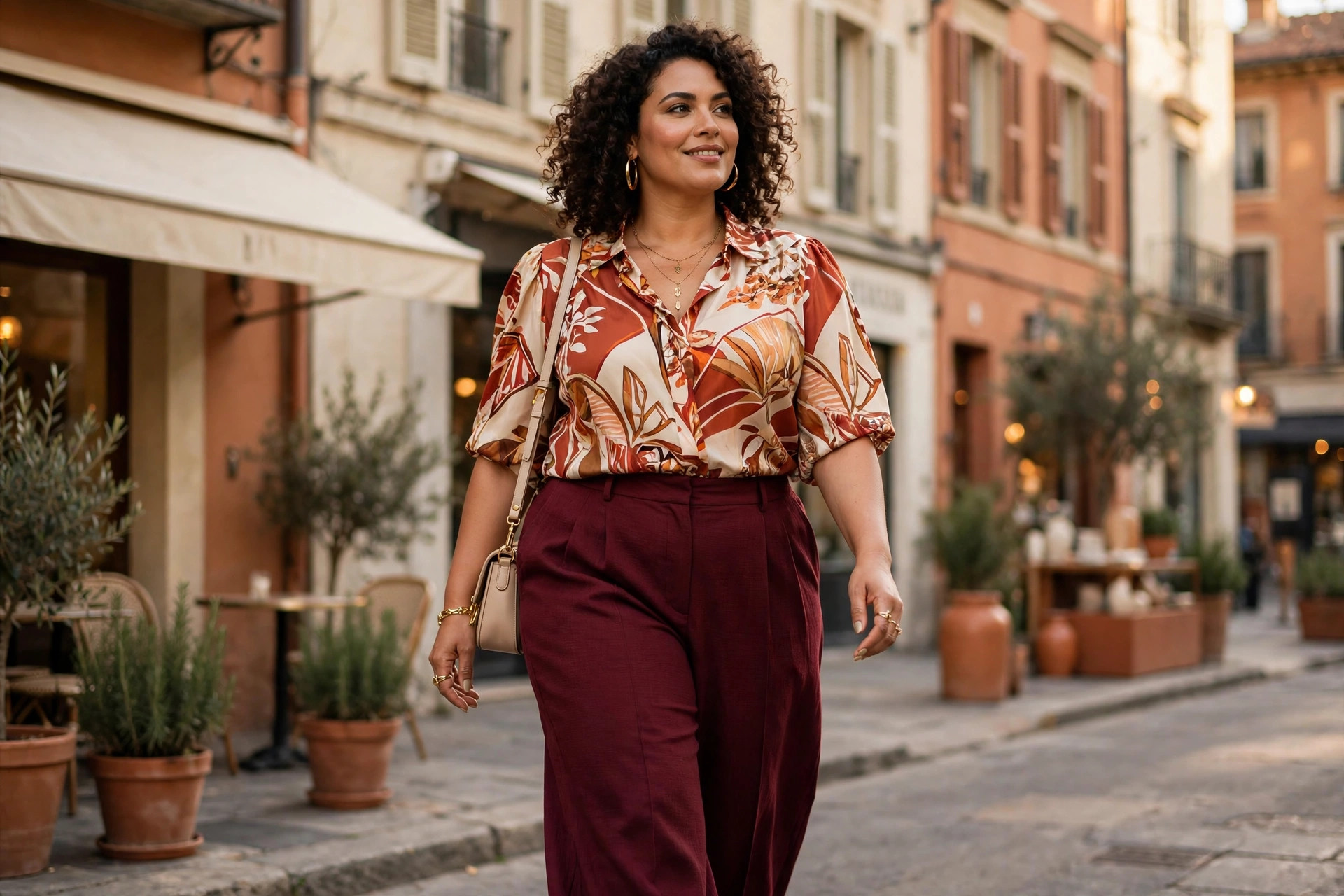
Plus-size wide-leg pants work beautifully when the rise sits at your natural waist, the fabric falls straight from the hip, and you keep the top half defined. Pick a clean front, skip fussy pleats at the tummy, and let the hem skim your shoe. That’s proportion without hiding.
If you’ve tried wide-leg pants and walked away thinking they just aren’t for your body, you’re not alone. Most pairs fail for boring reasons. The rise is too low. The fabric clings. The hem pools on the floor and drags the whole look down.
That doesn’t mean you should skip the style. It means you need a better checklist — so let’s get the fit right.
Start With the Rise, Not the Size Tag
Forget the number on the tag for a second. Rise matters more. A high rise that lands at or just above your natural waist gives the leg a long, clean start. A mid rise that cuts across the widest part of your belly? That’s where pulling, adjusting, and that constant tug-up dance come from.
Here’s a quick dressing-room test. Sit down. Bend. Reach for something on a low shelf. If you’re yanking the waistband back into place after every move, the rise isn’t working, no matter how good the pants looked standing still.
Look for these details at the front:
- A flat front or a single neat closure, not bulky buttons stacked over pockets
- A waistband that lies smooth when you’re seated, not folded over
- Pockets that stay flat — if they flare open, the hip is too tight
- Enough room to pinch a little fabric at the thigh without pulling at the waist
Don’t size up just to get a longer rise, either. You’ll end up with extra fabric everywhere else. If a brand offers a curvy fit with a higher back rise and a shaped waistband, try that cut first. It stops that gap at the back waist. You know the one.
Fabric Does Half the Work
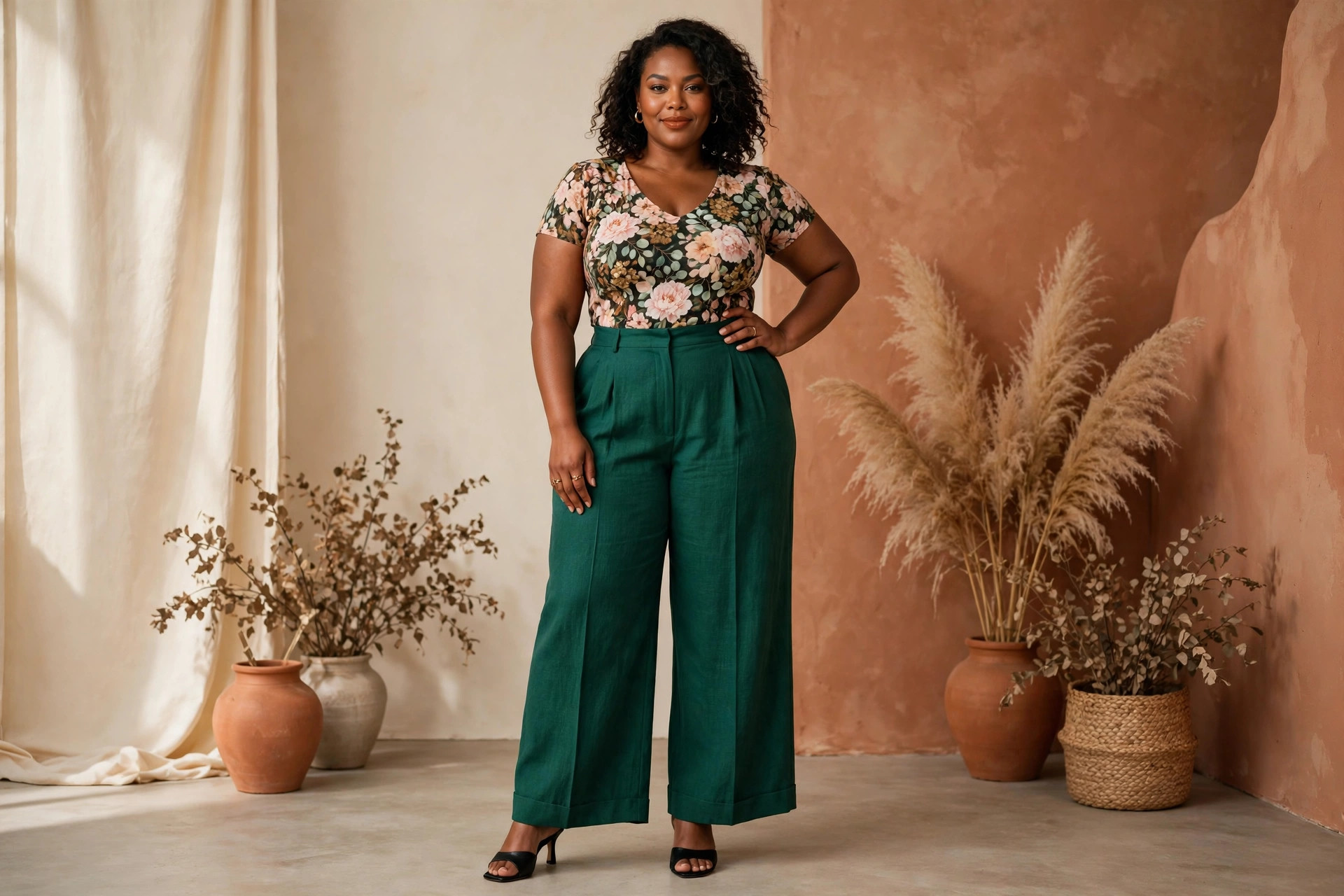
You can spot the right fabric before you even try the pants on. Hold them up. Shake them once. Good fabric for wide legs falls in a soft column and swings a little. Bad fabric does one of two things: it stands stiff like cardboard, or it collapses and shows every line underneath.
For most days, you want something in the middle. Crepe, fluid twill, soft denim with a touch of stretch, and linen blends all work well. They skim. They don’t hug. Pure stiff linen can add bulk at the hip, and super-thin jersey tends to cling, so save those for much looser cuts.
What to check in the fitting room
Turn sideways in the mirror. The fabric should drop from the fullest part of your hip in a fairly straight line to the hem. If it pulls in horizontal lines across the front, you need more room — not a smaller size and a prayer.
And check the back view. Really. Walk a few steps. A good pair moves with you and settles back into place.
The Top Half Sets the Balance
Wide on the bottom doesn’t mean wide on top. That’s the whole trick, and it’s simpler than it sounds. You’re giving your waist a job: show where it is, even softly, and the long leg line does the rest.
A full tuck is the easiest win. Tuck a fitted knit, a silky blouse, or even a plain tee all the way in, then blouse it out just a touch so it doesn’t feel stiff. Not into tucking? Try a top that ends right at the waistband. Cropped doesn’t have to mean bare midriff — a boxy tee or sweater that stops at the top of the pants reads modern and keeps your shape clear.
The French tuck works too. Tuck the front center, leave the sides loose. You get definition where it counts and coverage where you want it. What doesn’t work as well is a long, loose tunic that ends mid-thigh over wide legs. That combo hides your waist, hides the top of the pants, and leaves one big rectangle. You deserve better than rectangle.
- Work: a tucked-in jewel-tone blouse, sleeves pushed to the forearm, a slim belt if you like one
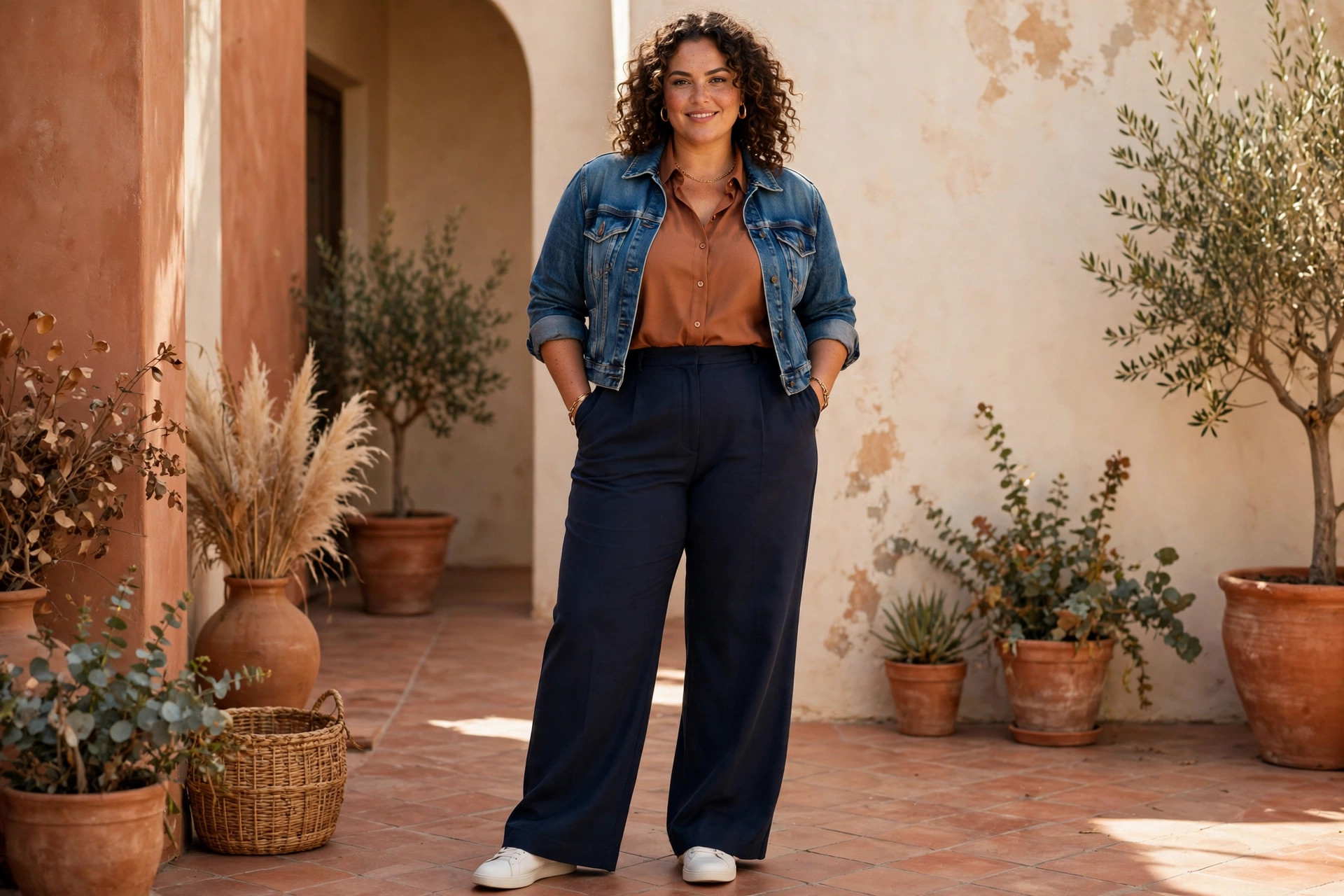
- Weekend: a fitted striped tee, denim wide legs, white sneakers
- Evening: a satin camisole under a short, open blazer that ends at the waist
Short layers help, too. A cropped denim jacket or a blazer that hits at the hip bone keeps the outfit in two clear parts. Long, open layers can work, but wear them over a tucked top so your waist doesn’t vanish underneath.
Shoes, Hems, and That Clean Line
Hem length can make or break this style. You want the hem to skim the top of your shoe or just brush the floor when you’re standing in the shoes you’ll actually wear. Too short, and the pants read like culottes that lost their way. Too long, and you’ll step on them, fray them, and feel sloppy by noon.
Bring your shoes to the fitting, or wear a similar height when you shop. A pair hemmed for flats won’t work with a heeled boot. If you split your time between both, hem for the shoe you wear most. One honest hem beats two compromises.
Which shoes pair best?
Pointed-toe flats and loafers stretch the leg line because the eye keeps going past the hem. Chunky sneakers work with denim and casual twill — just keep the hem from swallowing the shoe. A low block heel helps the fabric hang clean in longer lengths.
Skip very dainty, strappy shoes under heavy fabrics. The weight feels off. A shoe with some presence holds its own against all that fabric, and the outfit looks intentional instead of accidental.
Three Outfits That Prove the Point
Still picturing wide legs as dressy-only? They’re not. Here’s how the same idea shifts across your week without a lot of effort.
Desk to dinner. Black fluid wide-leg pants, a deep plum wrap top tucked in, and pointed loafers for the day. Swap the loafers for heeled boots, add big earrings, lose the tote for a small bag. Done. You didn’t change the base, and you don’t need to.
Saturday errands, but make it cute. Washed denim wide legs, a fitted white tee, and a bold floral shirt worn open as a light layer, sleeves rolled. The print brings the fun, the tee keeps your waist in sight. Comfortable? Completely. Frumpy? Not even close.
A wedding or a nice dinner. Wide-leg pants in soft satin or crepe, in navy or burgundy, with a lace-trim camisole tucked in and a short jacket over the top. You’ll sit, eat, and dance without a tight waistband digging in. That’s the whole point of getting dressed up and still feeling like yourself.
Mistakes That Make Wide Legs Feel Frumpy
Most wide-leg regrets come from the same short list. The good news? Every one of them is fixable, and none of them is your body.
- The waist sits in the wrong place. Low rises cut you in half. Choose a rise that meets your natural waist and watch the proportions sort themselves out.
- Too much fabric up front. Deep double pleats and cargo pockets at the hip add volume right where most of us don’t want extra. A clean front reads sleeker, always.
- The top covers everything. If your shirt hides the waistband and half the hip, the pants can’t do their job. Tuck, crop, or choose a shorter layer.
- The hem is a guess. Pants that puddle or hover rarely get worn. A tailor can fix the length in one visit, and you’ll reach for the pair ten times more.
- You bought them for a different life. Dry-clean-only silk for a toddler-chasing Tuesday? Be honest about your days, and buy the washable pair you’ll actually live in.
Here’s the thing nobody says out loud: you don’t need to earn a trend by shrinking first. Wide-leg pants aren’t a reward for a different body. They’re a cut of clothing. Cuts can be chosen well or badly, for any size, and now you’ve got the notes to choose well for yours.
Frequently Asked Questions
Can plus-size women wear wide-leg pants without looking bigger?
Yes. Fit decides that, not size. A high rise at your natural waist, fabric that falls straight from the hip, and a defined top half keep your proportions clear. Pairs that add bulk usually have a low rise, stiff fabric, or deep pleats at the front — skip those details and the silhouette stays clean.
What length should plus-size wide-leg pants be?
Aim for a hem that skims the top of your shoe or just brushes the floor in the shoes you’ll wear most. Take the exact shoes along when you get them hemmed. A hem that’s right for flats will drag with low heels and swing too short with boots, so pick your main pairing and tailor to that.
Are wide-leg pants okay for short plus-size women?
They are, with two tweaks. Choose a slightly narrower wide leg — think a straight, relaxed column rather than a dramatic flare — and keep the hem long and clean over a shoe with a little height or a pointed toe. A high rise helps too, since it gives you more uninterrupted leg line from waist to hem.
What tops should you avoid with wide-leg pants?
Long, loose tops that end mid-thigh are the toughest pairing, because they hide your waist and the top of the pants at the same time. If you love a longer layer, wear it open over a tucked-in or fitted top. That way you keep the coverage you like and the definition the outfit needs.
Which fabric is best for wide-leg pants in warm weather?
Linen blends and lightweight crepe breathe well and still fall in that soft column you want. Pure thin jersey tends to cling, and very stiff linen can feel bulky at the hip, so blends usually win. Check that the fabric isn’t see-through in daylight before you commit — hold it up to the shop window if you have to.