
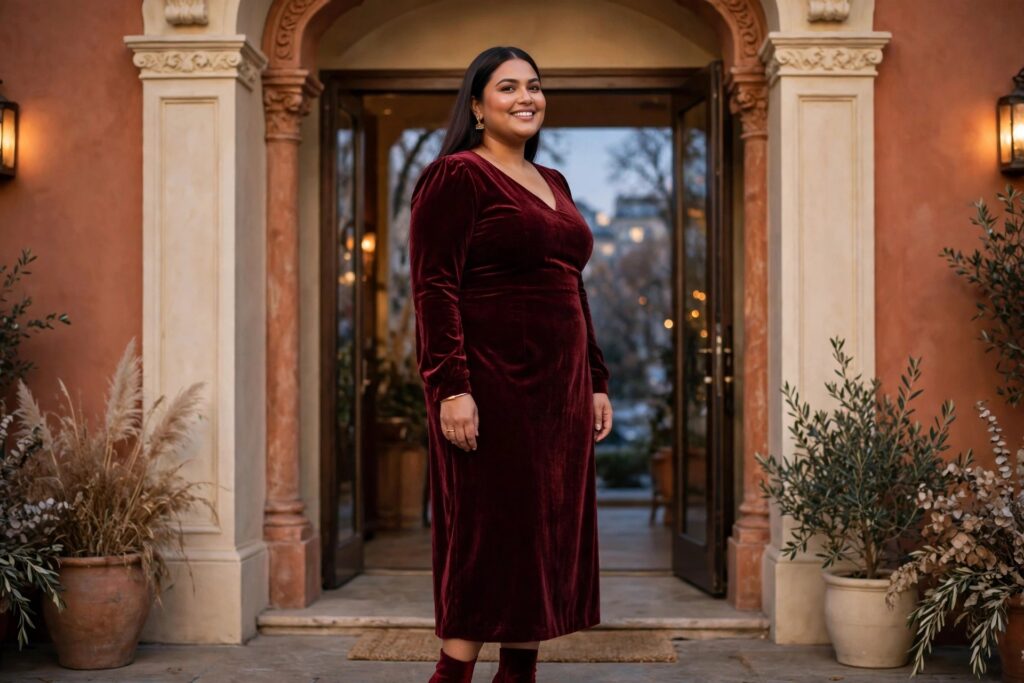
A great plus-size occasion dress for a winter wedding should keep you warm without burying your shape. Choose a heavier fabric like velvet, pick sleeves you don’t have to fuss with, go midi or longer, and add one smart layer you can take off indoors. That’s the whole formula. Warm. Polished. Still unmistakably you.
What makes a plus-size occasion dress work for a winter wedding?
Start with four things, in this order: warm fabric, covered arms, enough length, and a layer that comes off. Velvet or heavy crepe handles the cold, long or three-quarter sleeves skip the constant shrug-adjusting, a midi or floor length covers tights and boots, and a tailored coat or wrap finishes the arrival without hiding the dress all night.
1. Warm fabric first
Fabric does the heavy lifting in winter. Velvet, heavy crepe, ponte, and satin with some weight to it block a draft far better than thin chiffon or a floaty summer lining. You’ll feel the difference the second you step outside.
Hold a dress up to the light before you commit. Can you see straight through it? Then it won’t hold any heat, and you’ll spend the evening thinking about the cold instead of the couple. A lined bodice helps too. So does a lined skirt.
2. Covered arms, no fussing
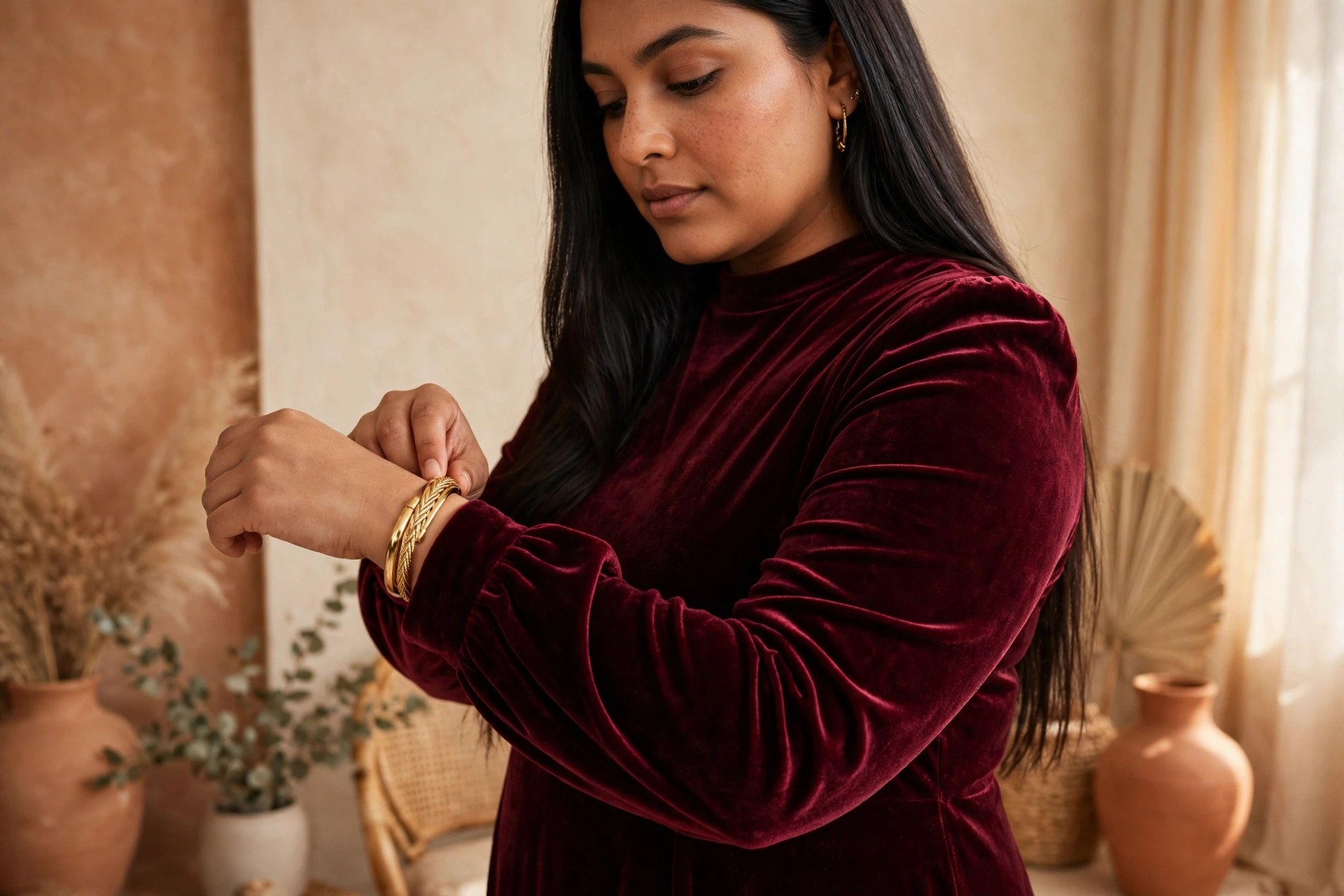
Long sleeves solve two problems at once. You stay warmer, and you stop tugging at a wrap that keeps sliding off your shoulders. Three-quarter sleeves work beautifully if full length feels like too much, especially with a bracelet or a watch peeking out.
Prefer a sleeveless dress you already love? Don’t rule it out. Just plan the cover-up as part of the outfit, not as an afterthought you grab from the coat closet on your way out.
3. Midi or longer length
A midi or floor-length hem earns its keep in cold weather. It covers opaque tights, it hides a practical boot during the walk from the car, and it moves in a way that photographs well. Knee length can work. It just asks more of your layering.
Check the hem with the shoes you’ll actually wear. A floor-length dress that pools on wet pavement isn’t glamorous. It’s a laundry bill.
4. A layer that comes off indoors
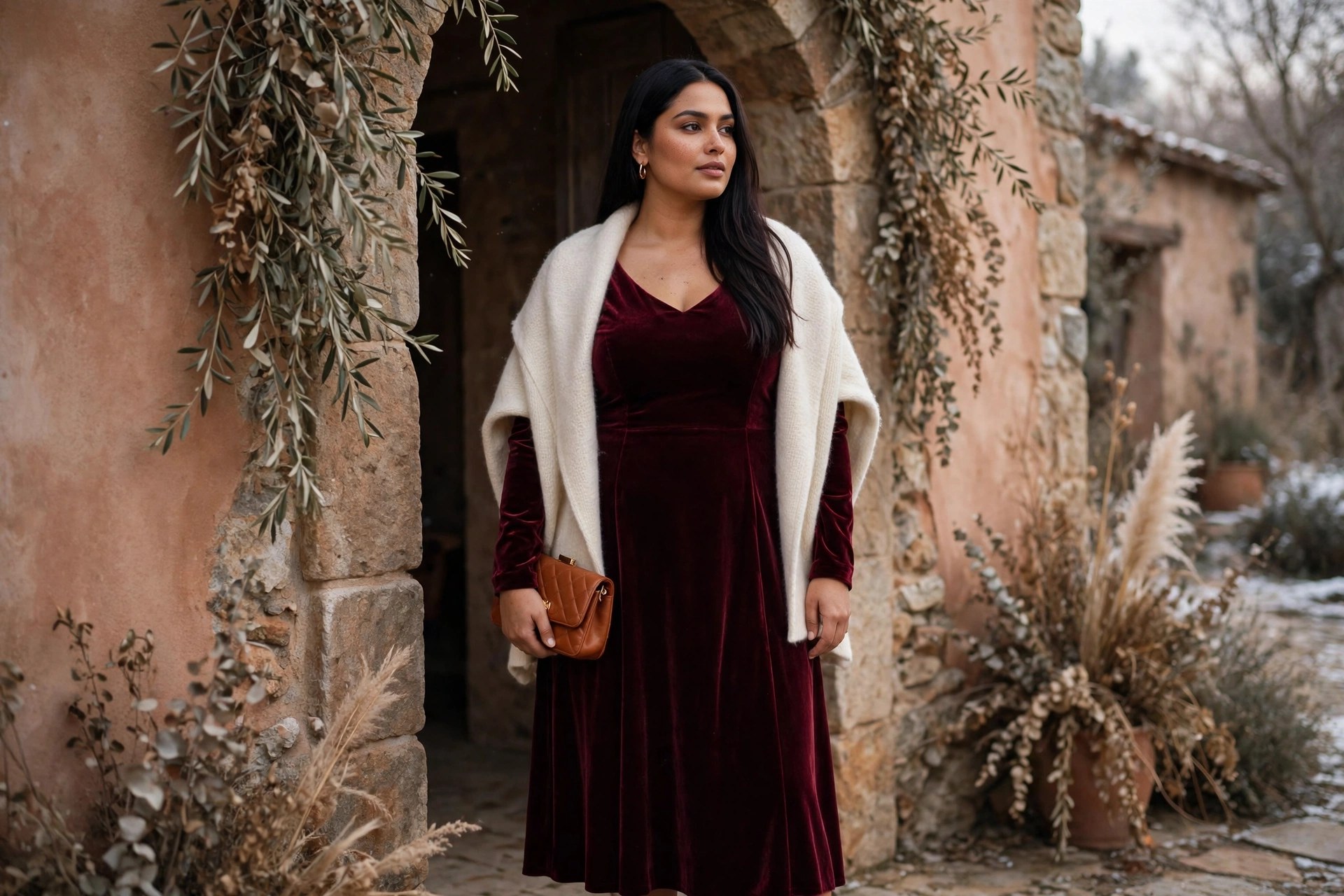
Weddings move. Ceremony, drinks, dinner, dancing — and the temperature changes at every stop. Your outer layer should look deliberate outside and come off cleanly once you’re in. A tailored wool coat, a structured cape, or a thick wrap in a deep tone all do that job.
What doesn’t work? A puffy everyday coat thrown over a beautiful dress. You don’t need a new coat for one wedding, but do borrow or choose the smartest one you own. The arrival photos will thank you.
Which winter fabrics hold up best?
Not every “winter” dress is actually warm. Some are just dark. Use the table below to sort the fabrics that insulate from the ones that only look the part, then read the notes under it before you order anything.
| Fabric | Warmth | Drape | Wrinkle behaviour | Best venue |
|---|---|---|---|---|
| Velvet | High | Soft, fluid, skims curves | Resists light creasing; store hanging | Evening receptions, historic houses, hotels |
| Heavy crepe | Medium to high | Smooth and structured | Very forgiving after a long sit-down dinner | All-day weddings, registry offices |
| Satin with weight | Medium | Liquid shine, shows seams clearly | Creases show; steam before wearing | Formal evening weddings |
| Ponte / scuba | Medium to high | Firm, holds its shape | Barely wrinkles at all | Relaxed venues, travel to a wedding |
| Chiffon / organza | Low | Floaty and sheer | Light, but offers almost no insulation | Heated indoor venues only, layered up |
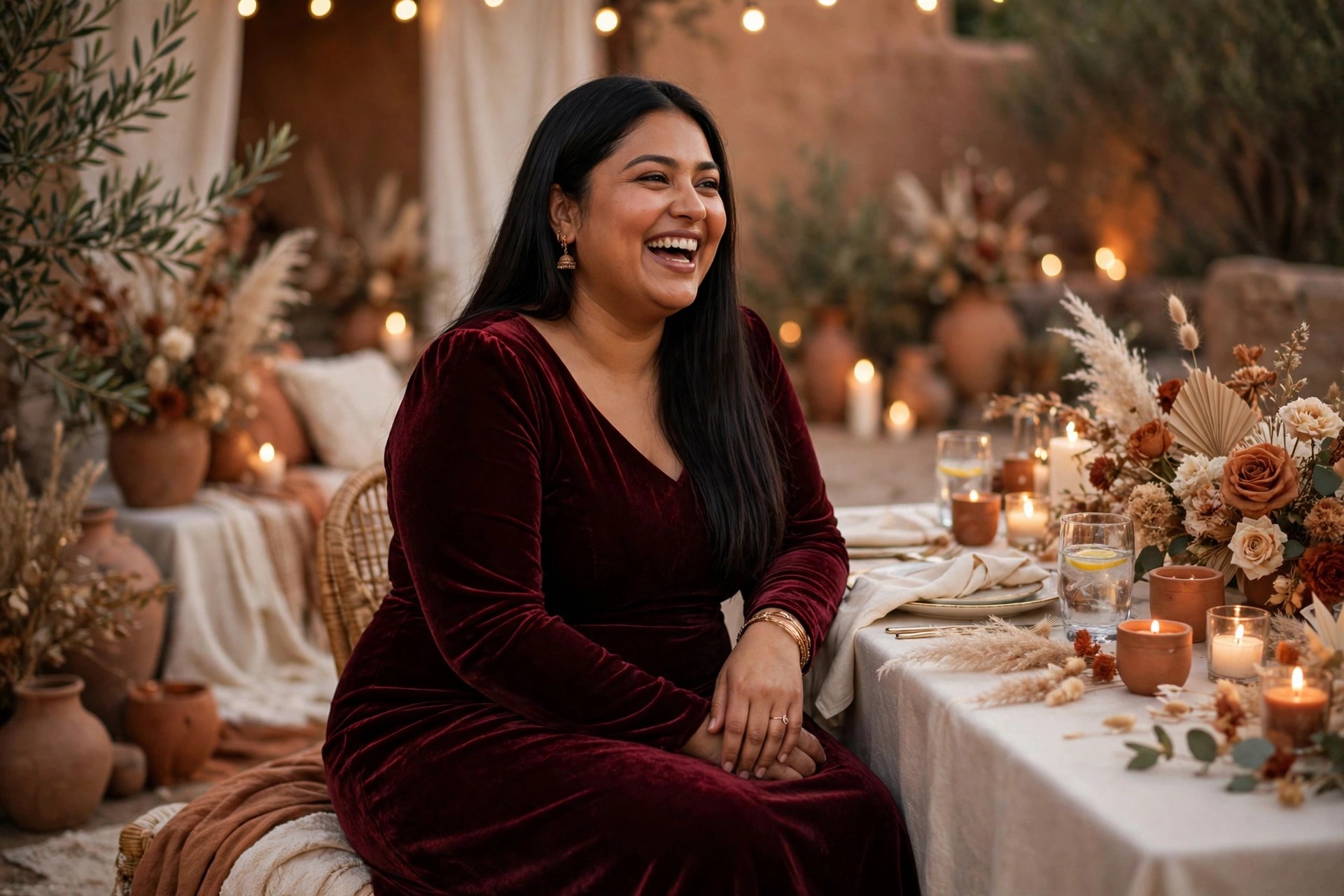
Velvet deserves its reputation. It reads rich in low light, it skims rather than clings, and deeper shades — burgundy, forest, navy, plum — look expensive without any extra effort from you. One caution: velvet can grab lint. Keep a small roller in your bag.
Crepe is the quiet workhorse. It won’t shout in the photos, and that’s the point. If you’ll sit through a long dinner and then dance, crepe forgives the whole schedule. Satin is the drama option. Beautiful, yes. But it shows every seam and every crease, so it suits a shorter, more formal evening where you aren’t travelling far.
Which dress shapes feel good all evening?
The most comfortable plus-size occasion shapes for winter are the ones with structure at the top and room below it: an A-line skirt, a fit-and-flare cut, or an empire waist that releases just under the bust. You get definition where you want it, space to sit and eat, and a skirt that handles tights and layers without clinging.
A-line and fit-and-flare
These two earn their popularity honestly. The bodice gives you shape, the skirt gives you freedom, and the whole dress still looks right at midnight. For winter, look for a version with a lined bodice and a skirt with enough weight to hang properly. A flimsy skirt under a heavy top looks unbalanced.
Try the sit-down test in the fitting room. Sit. Cross your legs. Reach forward like you’re passing the bread. If the waistband fights you at any point, size up or walk away. Nobody remembers a dress size. Everybody remembers looking uncomfortable.
Empire waist and structured columns
An empire line suits you if you prefer the emphasis up top, near your face and neckline. It’s also kind to anyone who doesn’t want fabric sitting tight across the stomach during a three-course dinner. Fair enough.
A structured column dress can look stunning, especially in velvet. The catch? It needs real fabric weight and good underlayers, or it clings in the wrong places. Check it from the side in daylight, not just under flattering shop lights. Daylight tells the truth.
Colour, neckline, and the venue in front of you
Winter weddings reward deeper colour. Burgundy, emerald, sapphire, charcoal, and rich plum all sit well against pale winter light and candlelit rooms. Black is fine too, whatever the old rules said. Add warmth with gold jewellery or a deep red lip and it won’t read funereal.
Pastels aren’t banned. They’re just harder. An icy blue or blush dress in a thin fabric can look washed out in January light, so if you go pale, go heavier on fabric and stronger on accessories.
Necklines that work with layers
A V-neck or scoop neck leaves room for a necklace and keeps a coat collar from crowding your face. A high neck or mock neck looks sharp in velvet and needs almost no jewellery — just earrings. Off-the-shoulder styles are lovely in July. In January, they’re a negotiation with the weather you’ll probably lose.
Think about your bra early, not the night before. The neckline decides the straps, and the straps decide whether you’ll adjust yourself all evening. Sort it with the dress on, in front of a mirror, moving around. Dancing arms included.
Read the venue, not just the invitation
“Black tie” in a heated hotel ballroom is a different brief from “smart” in a barn with heaters in the corners. Look at the venue photos online. Stone floors? Expect cold ankles. A long outdoor walk between ceremony and reception? Your hem and shoes need a rethink.
Dress codes still matter, of course. Just translate them into weather. A floor-length dress with sleeves beats a short formal dress plus goosebumps every single time.
How do you stay warm without hiding the dress?
You stay warm in layers you choose on purpose: opaque tights or thermal leggings under a longer skirt, a proper coat or cape over the top, and closed shoes you can stand in. Each layer should earn its place and still look like part of the outfit, so nothing feels borrowed, bulky, or apologetic once you’re indoors.
Under the dress: tights, slips, and warmth you can’t see
Opaque tights in black or a tone close to the dress disappear under a midi or floor-length hem. Fleece-lined tights exist, and on a genuinely cold day you’ll be glad they do. Nobody can see them. Everybody can see you shivering.
A slip helps velvet and satin glide instead of catching on tights. Static is the enemy here. If the skirt clings to your legs when you walk across the room at home, it’ll do the same down the aisle-side carpet. Fix it before the day, with a slip or an anti-static spray.
Over the dress: coats, capes, and wraps
Your coat is part of the outfit for the first ten minutes, and those minutes get photographed. A long tailored coat that covers most of the hem looks intentional. A cape keeps sleeves and bodice details visible while still covering your arms. A thick wrap works for milder days and short walks.
Check one detail people forget: the coat must close over the dress. Not strain. Close. Try it sitting down too, because you’ll sit in a car wearing both.
Shoes, bags, and finishing touches
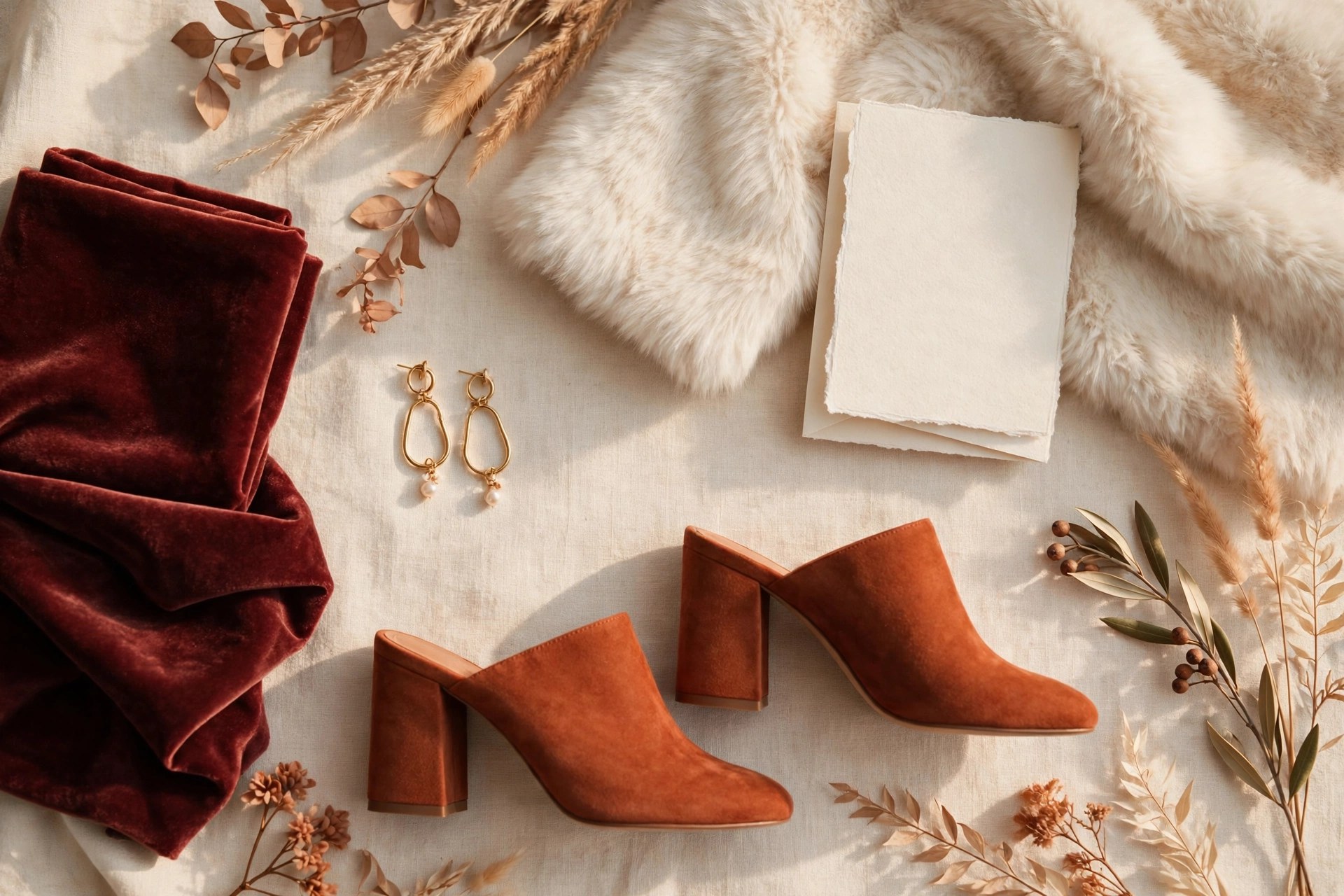
Closed shoes are the sensible winter default, and sensible doesn’t mean dull. A block-heeled court shoe, a heeled ankle boot, or a polished loafer-style heel all handle cold pavements and long standing spells better than a strappy sandal. Suede looks rich with velvet. Just check the forecast — rain and suede don’t mix.
Break your shoes in at home. Wear them for an evening around the house, stairs included. Blisters by the first dance? That’s a short night.
For bags, pick a clutch or small shoulder bag that fits your phone, a lip product, plasters, and that lint roller. A shoulder strap earns bonus points at the drinks reception, when you need one hand for a glass and one for greetings. Gold, bronze, or a deep jewel tone will carry almost any winter dress colour you choose.
Jewellery can stay simple. Velvet and satin already bring the texture, so one strong piece — earrings or a necklace, rarely both — is plenty. You’re not decorating a tree. You’re finishing a look.
Shopping without the last-minute scramble
Winter occasionwear sells in a short window, and the good velvet dresses go first. If the wedding falls in December or January, start looking at least six weeks ahead. That gives you time for delivery, a proper try-on at home, and tailoring without rush fees or a last-minute panic.
Order one size if you know the brand well. Order two if you don’t and returns are free. Try them on in the evening, after food, in the underwear and shoes you’ll wear on the day. Morning try-ons lie. Your body at nine in the morning, before breakfast, isn’t the body that will sit through a wedding dinner — and the dress has to work for the second one.
Keep the tags on until you’ve done the full test: sitting, walking, stairs, coat on, coat off. Check the seams and hem in daylight too. Deep colours can look perfect indoors and oddly flat outside, and a loose thread found at home is a five-minute fix, not a small crisis in a hotel bathroom an hour before the ceremony.
Fit checks to do before the day
Good fit is what separates a dress you wear from a dress that wears you. Run these checks a week ahead, while there’s still time to see a tailor.
- The sit test: sit, stand, sit again. The waist and hips should let you breathe after a full meal, not just before one.
- The reach test: raise both arms like you’re hugging the couple. Sleeves and shoulders shouldn’t pull the whole bodice up.
- The walk test: walk briskly in your wedding shoes. The hem shouldn’t catch your heel or wrap around your legs.
- The photo test: take photos in daylight and lamplight, front and side. Velvet and satin change a lot between the two.
- The layer test: put the coat on over the dress and close it. Then take it off and check the dress hasn’t creased or shifted.
Small tailoring jobs pay off. Taking up a hem so it clears wet ground, adding a discreet snap where a neckline gaps, or letting out a seam a fraction — these are the fixes that make an off-the-rack dress look made for you. Budget the time, even if you skip everything else on this list.
Quick answers
Can I wear tights with a plus-size occasion dress?
Yes. Opaque tights under a midi or floor-length dress are almost invisible, especially in black or a tone close to the dress, and fleece-lined pairs handle genuinely cold days.
Is velvet a good choice for a winter wedding?
Yes. Velvet is warm, skims rather than clings, and deep shades like burgundy and plum photograph beautifully in low winter light. Just keep a lint roller in your bag.
What if the dress I love is sleeveless?
Wear it, and plan the cover-up as part of the outfit. A tailored coat, a structured cape, or a thick wrap keeps you warm outside and comes off cleanly indoors.
Bottom line
A winter wedding isn’t a test of endurance. You don’t win anything for being cold in a pretty dress. Pick a fabric with weight, sleeves you can forget about, a length that works with tights and real shoes, and one good layer for the door. Do that, and the dress stops being a problem to manage. It just becomes what you wore on a good night, in photos you’ll actually like.
This article was created with AI assistance and reviewed by our editorial team before publishing.