Plus-size labels change from brand to brand because there is no single shared sizing standard, and each label grades, cuts, and fits its clothes differently. Your bust, waist, and hip measurements do not change between shops. The number on the tag does. Shop by measurements, not by that number.
Your Body Did Not Change in the Fitting Room
You know this moment. One dress zips up easily, the next will not close, and both tags say the same size.
Frustrating? Completely.
It is easy to blame your body in that small, badly lit room. Please don’t. The clothes changed, not you, and once that clicks, shopping gets a lot less personal and a lot more practical.
There Is No Single Rule Book for Sizes
Ready-to-wear sizing looks official. It isn’t. Brands are not required to follow one universal chart for women’s clothing, so each company builds its own chart and guards it as part of its identity.
One brand’s size 18 might be cut for a certain bust, waist, and hip combination. Another brand uses different numbers for the same label. Same tag, different garment.
Vanity sizing, explained plainly
Vanity sizing is the quiet habit of making a garment larger while keeping the label the same, or even smaller. A dress that would once have been marked a larger size gets a lower number because that number feels friendlier at checkout.
Nobody announces it. Labels just drift over time, which is why a size saved from years ago cannot be trusted as a guide now. Vintage sizing runs different again, so a thrifted find needs a tape measure, not a guess.
Grade rules shape the bigger sizes
Patterns start from one sample size, then they are graded up and down to make the rest of the range. Grade rules are the steps added between sizes at the bust, waist, and hip.
Here is where plus sizes often get shortchanged. Some brands simply add the same step again and again, as if a larger body were just a taller, wider copy of a smaller one. Real bodies don’t scale like that. Waists, hips, upper arms, and busts change at different rates, and a lazy grade misses all of that nuance.
Why Two Brands Cut the Same Size Differently
Even with identical charts, two dresses would still fit differently. Cut, fabric, and the person a brand designs for all pull the fit in different directions.
Think of sizing as a starting point, not a promise. The garment in your hands has its own shape, and your job is matching that shape to yours.
Every brand designs for a different fit model
Most brands develop clothes on a fit model, a real person whose proportions guide the pattern. If that model carries weight mainly at the hips, the range will tend to suit pear shapes. If she is fuller at the bust and middle, apple shapes may find a better match there.
Neither approach is wrong. It just means a brand can be consistently right for someone else and consistently off for you. That’s useful information, not a verdict on your body.
Fabric and cut change everything
A stiff woven dress has nowhere to go. A stretch jersey wrap dress has plenty of give, forgives a snug morning, and moves when you sit, reach, or dance a little in the kitchen.
Cut matters just as much. An empire line skims the waist, a fit-and-flare defines it, and a straight shift ignores it entirely. Two garments with the same measurements on paper can feel like different sizes on the body simply because the seams sit in different places.
Ranges stop and start in different places
Some labels treat size 14 as plus. Others start at 16, 18, or 20. Extended ranges bolted onto a straight-size line often fit differently from ranges designed as plus from the start, because the starting pattern and grade rules differ.
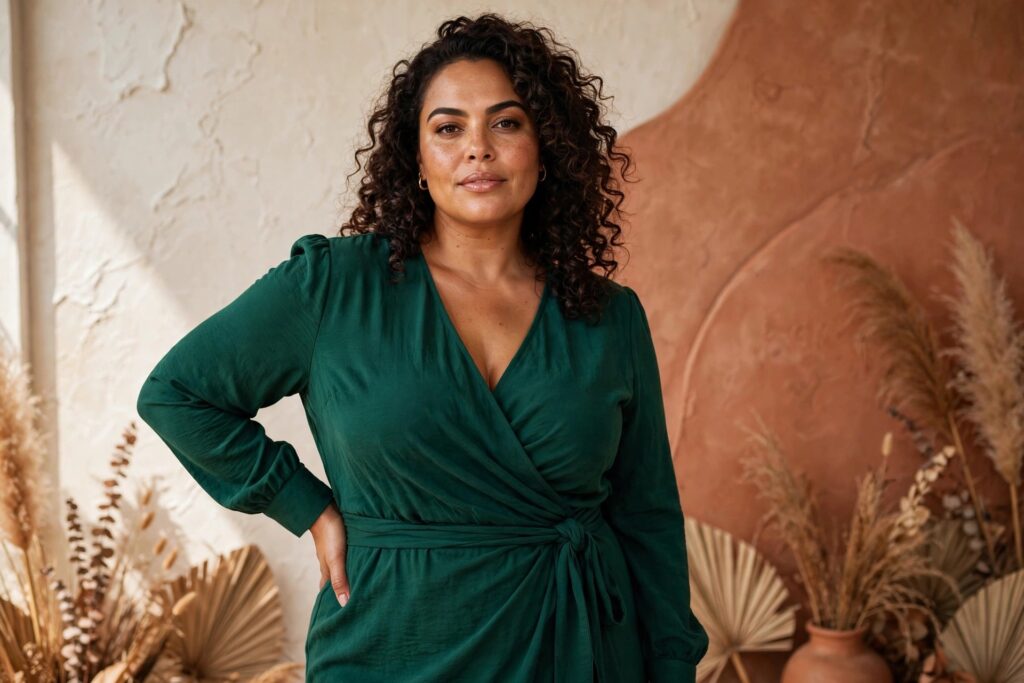
That is why a dedicated plus range in a rich emerald wrap dress can feel made for curves, while an extended size in the same style elsewhere pinches at the arm and gaps at the bust. The design process leaves fingerprints.
The Numbers That Travel With You
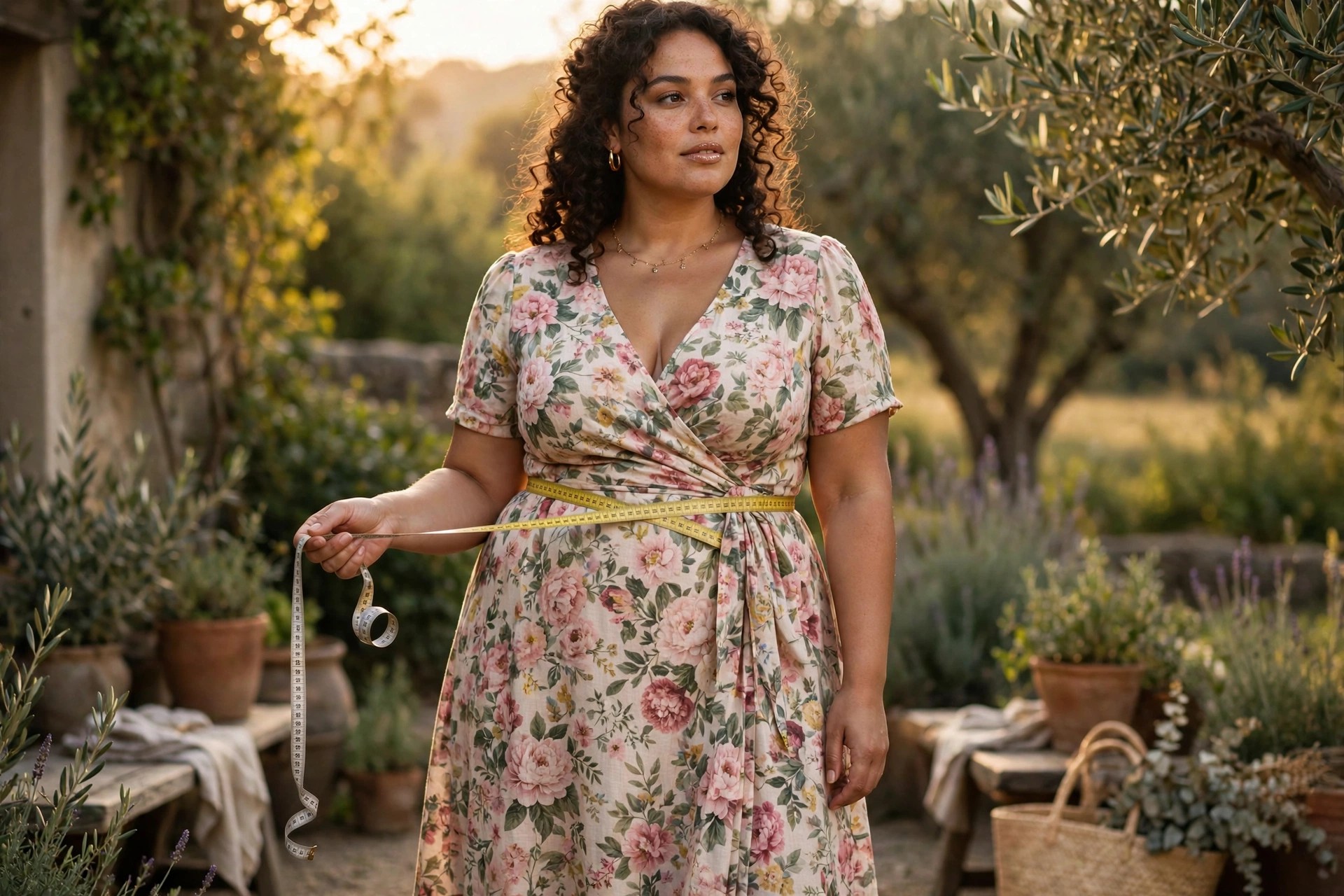
Your measurements are portable. A size label is not. Bust, waist, and hip are the three standard measurement points most charts use, and knowing yours in both inches and centimetres makes every chart readable.
Measure over light clothing, keep the tape level, and don’t pull it tight. Breathe out. Stand normally. The goal is a number you can actually wear, sit down in, and eat lunch in.
- Bust: around the fullest part, keeping the tape level across your back.
- Waist: around the narrowest part of your torso, usually just above the navel.
- Hip: around the fullest part of your hips and seat.
- Extras worth noting: upper arm, thigh, and your preferred skirt or dress length.
Write them in your phone. Update them every few months, or after any change that affects how clothes sit. Bodies shift for all sorts of ordinary reasons, and fresh numbers beat fond memories of old ones.
How to Shop Anyway, Without the Spiral
None of this means shopping has to become homework. A few habits turn the guesswork down and the confidence up, whether you’re browsing online at midnight or standing in a store on a Saturday.
Start with the chart, not the tag
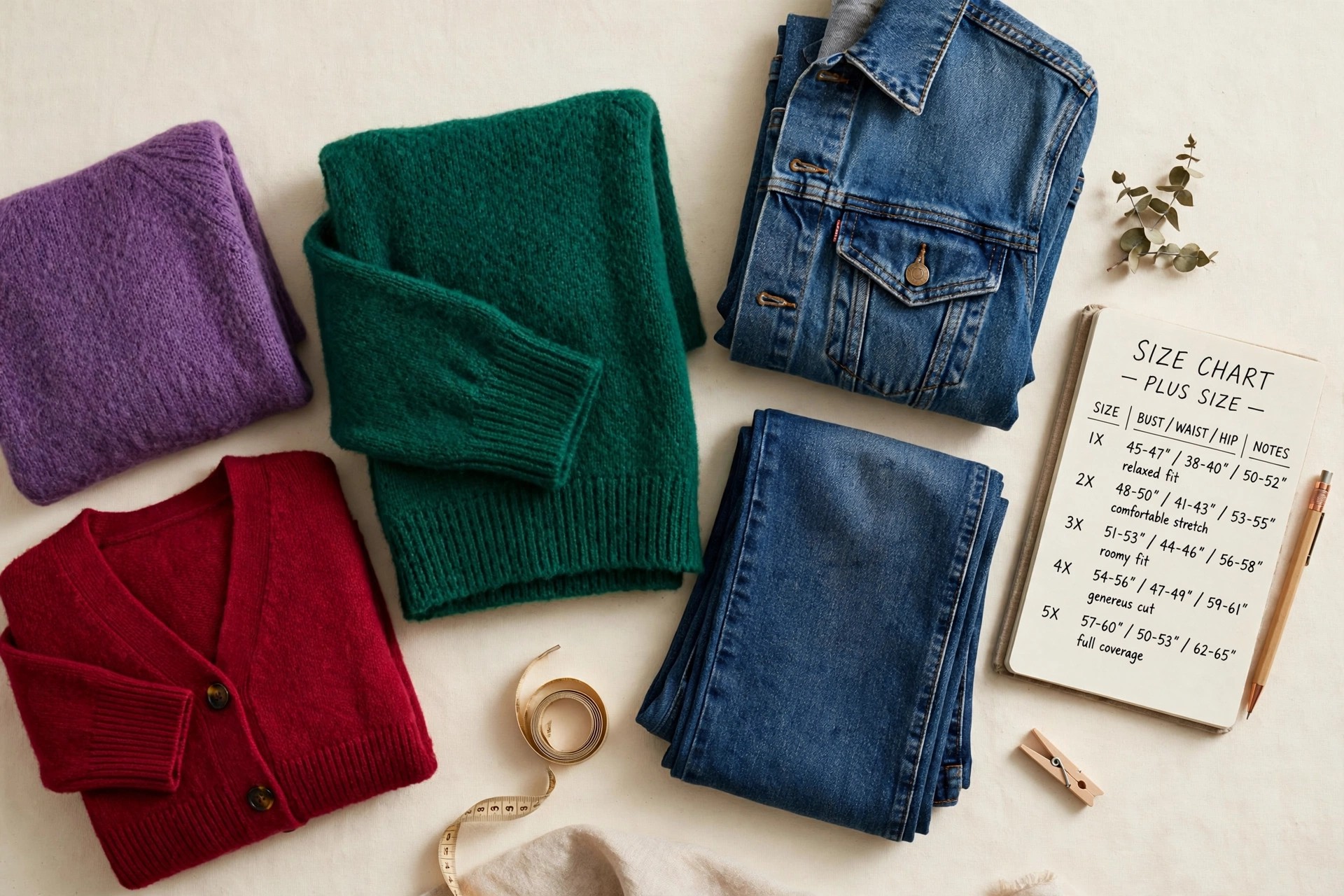
Open the brand’s own size chart every time. Yes, every time. Compare your bust, waist, and hip to the chart and pick the size that fits your largest measurement for that garment, especially for woven pieces with no stretch.
Between sizes? Look at the cut. A wrap dress, a smocked back, or an elastic panel can handle the smaller option, while a button-front shirt usually can’t. Buttons tell the truth quickly.
Read the details other shoppers skip
Check the fabric blend before you fall for the color. Stretch content, lining, and closure type all change fit. Look for garment measurements when a retailer lists them, since a flat garment measurement compared with something you already own and love is one of the most reliable guides going.
Reviews help most when a reviewer shares her size, measurements, and what she bought. A bare “runs small” means little. “Runs small, order up if you’re fuller in the hip” means a lot.
Build a short fit note for each brand
Keep a simple note in your phone. Brand, item, size bought, and one line on fit. Snug at the waist. Perfect in a floral midi. Denim needs one size up.
After a few orders, patterns appear. You’ll know which label cuts generously at the hip, which one skimps on sleeve room, and which jewel-tone dress line is worth watching for new prints. That note is your personal size chart, and it’s more honest than any tag.
In store, take two sizes in with you
Grab your usual size and one up. Sometimes one down, too. It isn’t pessimism, it’s efficiency, and it saves the half-dressed shuffle to find a different size while your shoes are off.
Move in the fitting room. Sit. Lift your arms. Bend a little. A dress that only works while you stand perfectly still will not survive a wedding, a workday, or a bus ride home.
What to Do When Nothing on the Rail Fits
Some days, nothing works. The colors are wrong, the sleeves pinch, every waist sits in the wrong place, and the mirror seems rude.
Leave. Really.
A bad rail is a stock problem, not a body problem. New drops arrive, other brands cut differently, and a good tailor can adjust a near miss at the waist or hem far more easily than a shop can restock by Friday. Shopping another day, with fresh eyes and your measurements in hand, is a strategy. Not a surrender.
Over time, most shoppers land on a small set of brands that respect their shape, a few cuts that reliably flatter, and a clear sense of what to skip without trying it on. That knowledge builds slowly. It also lasts.
FAQ
Why am I a different size in every shop?
Because each brand uses its own size chart, fit model, and grade rules. There is no single enforced standard for women’s ready-to-wear, so the same label can stand for different bust, waist, and hip measurements in different stores.
What measurements should be taken before shopping online?
Start with bust, waist, and hip, measured level and not pulled tight over light clothing. Add upper arm and thigh if sleeves or trousers often cause trouble, then compare all of them with the brand’s own chart for that item.
Does vanity sizing affect plus-size ranges too?
Yes. Labels have drifted across the whole market over time, including plus ranges, which is why an older favorite in a saved size may not match a new version. Current measurements and the current chart are safer guides than memory.
Should a larger or smaller size be chosen when between sizes?
For woven, structured, or button-front pieces, the larger size usually gives more comfort and tailoring room. For stretch jersey, wrap styles, or smocked designs, the smaller size may sit better. Check fabric and cut before deciding.