
Wedding guest dressing comes with a special kind of pressure. There’s the dress code to decode, the photos you’ll be in for decades, the ceremony-to-dance-floor marathon — and underneath all of it, the quiet question so many curvy women ask: will I feel like myself in this? You should. A wedding is a celebration, not a test. Here’s how to find a guest dress that lets you enjoy every minute of it.
The secret nobody tells you: the best wedding guest dresses for plus-size women aren’t about hiding or minimizing anything. They’re about structure in the right places, fabric that moves with you, and a silhouette you don’t have to think about once it’s on. Let’s find yours.
First, decode the dress code
Half of wedding outfit stress is just translation. “Cocktail attire” means a knee-to-midi dress with some polish — not a gown, not jeans. “Garden party” or “outdoor” means block heels or flats (stilettos sink into grass, and that’s physics, not fashion), plus a layer for when the sun drops. “Black tie” is the only code that truly wants a floor-length gown.
When the invitation is vague — and so many are — aim for the middle: a midi dress in a rich color or print, dressed up with good shoes and jewelry. You can rarely go wrong landing one notch above what you think everyone else will wear. And if you’re truly stuck? Ask someone in the wedding party. They’d rather answer a text than see you uncomfortable.
Five silhouettes that work hard
The wrap dress
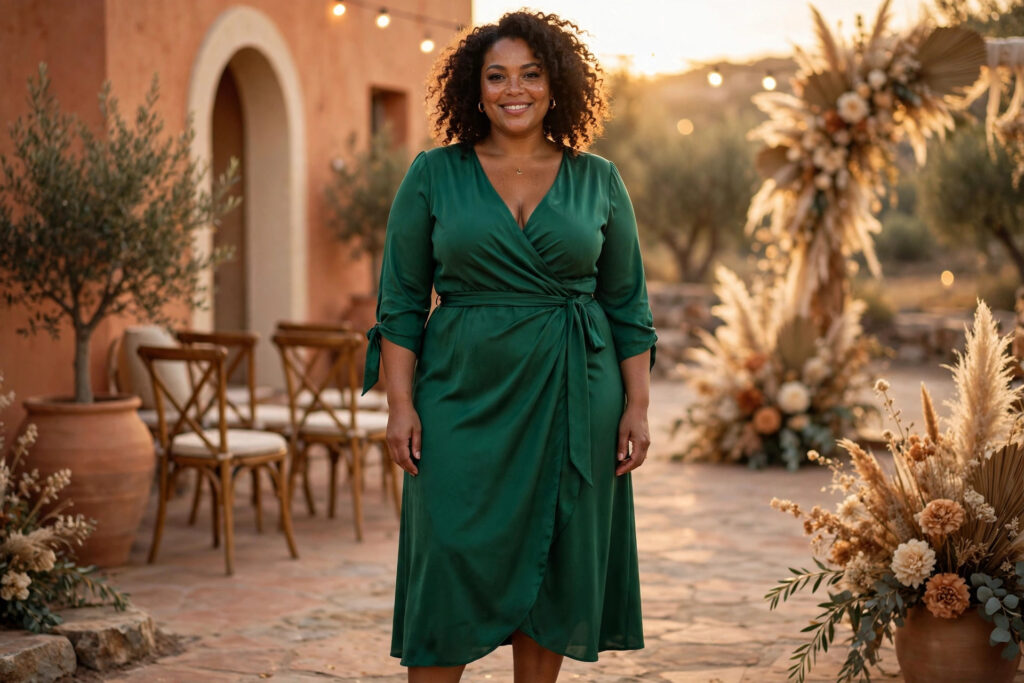
The hardest-working silhouette in this list. A true wrap ties at the waist, which means it adjusts to your body rather than asking your body to match its measurements. The V-neckline elongates, the skirt skims, and the tie defines the waist exactly where you want it. In a jewel tone like emerald or sapphire, it’s wedding-perfect. One caution: sit down in the fitting room and check the wrap stays closed — a hidden snap at the crossover point solves the only real risk.
The fit-and-flare
Fitted through the bodice, flaring from the waist — the silhouette that made the 1950s famous still works because the proportions are honest. It celebrates the bust and waist, then gives the hips and thighs complete freedom. Look for a defined waist seam (not an empire waist that starts under the bust, which is a different look entirely) and a skirt with enough fullness to move when you do. This is the twirl-on-the-dance-floor dress.
The bias-cut slip dress
Don’t dismiss this one. A bias-cut midi in a good weight of satin or crepe drapes over curves instead of clinging to them — the diagonal cut is doing quiet engineering. Adjustable straps are non-negotiable (your torso length is specific to you), and a cowl or V-neck keeps it elegant. Layer a cropped jacket or shawl for the ceremony if you want more coverage, then ditch it for the reception.
The tiered maxi
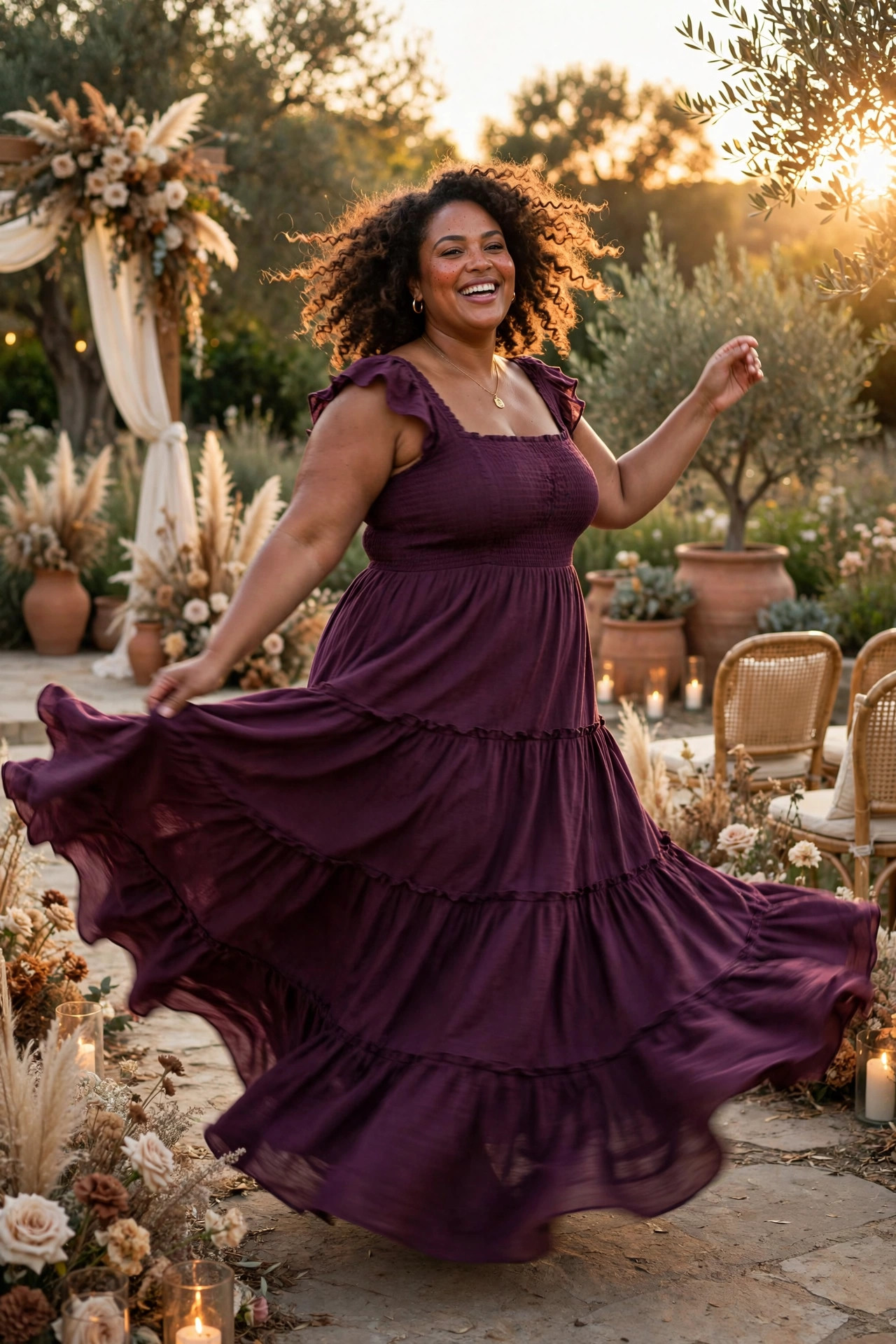
For outdoor, daytime, or destination weddings, the tiered maxi is unbeatable: romantic, comfortable, and it photographs beautifully in motion. The tiers add volume strategically — they skim rather than add bulk because each tier starts below the last one’s fullest point. Smocked bodices are your friend here; they stretch, they breathe, and they don’t require shapewear.
The tailored sheath
For the formal and black-tie-optional weddings, a sheath with real tailoring — princess seams, a back vent, a proper lining — reads as polished and powerful. The key is that it’s tailored, not just tight: seams should follow your shape without pulling. A three-quarter sleeve is universally flattering and solves the arms question without a shrug.
Fabric and details that matter
Fabric choice decides whether a dress is comfortable at hour six, not just hour one. Look for a little stretch — even 3 to 5 percent elastane changes everything in a fitted bodice. A full lining (not just a half-slip situation) means the dress glides instead of clinging, and it hides seam lines under the fabric.
Straps deserve a paragraph of their own. If a dress has thin straps, check they’re adjustable — non-adjustable straps assume a standard torso that doesn’t exist. Convertible or wide-set straps distribute better on curvier frames. And pockets? A guest dress with pockets is a small joy. You’ll use them.
Color: wear what you actually want
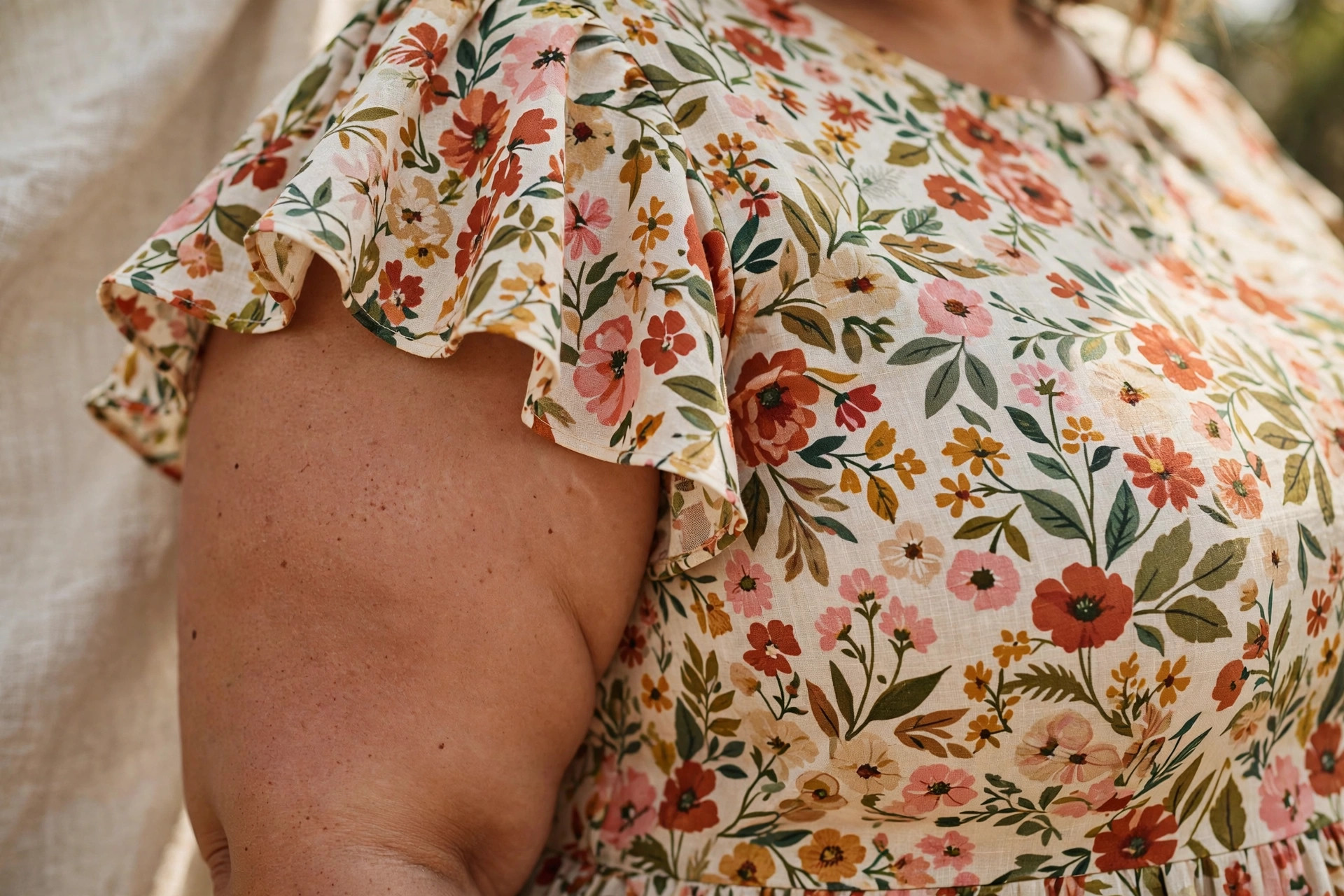
The old rulebook says no white, no black, nothing too bright. The modern version is simpler: don’t wear anything that could be mistaken for the bride (white, ivory, champagne), and otherwise, wear the color that makes you feel fantastic. Jewel tones — emerald, sapphire, ruby, deep plum — are universally flattering and photograph richly. Bold florals and abstract prints are wedding-guest classics for a reason.
About black: the “never wear black to a wedding” rule has softened enormously. A black dress with festive accessories reads chic, not funereal, at most modern weddings. The exception is very traditional or cultural ceremonies — when in doubt, check with someone who knows the family.
The finishing touches
Accessories are where a good outfit becomes a great one, and they’re also the cheapest part to get right. A structured clutch or small crossbody keeps your hands free for hugging and champagne. Jewelry should complement the neckline — a pendant for a V-neck, statement earrings for a high neckline — not compete with it.
And plan the layer now, not at the venue. A pashmina, a cropped jacket, or a tailored blazer in a complementary tone covers the ceremony-to-reception temperature drop and the air-conditioned dinner. Choose it when you choose the dress, try them together, and you’ll never do the awkward shawl-clutching thing in the church parking lot.
Wedding guest FAQs
What shoes survive a whole wedding?
Block heels, wedges, or dressy flats — in that order. Break them in before the day (wear them around the house for two evenings), and throw foldable flats in your bag for the dance floor. Your feet will thank you at midnight.
Do I need shapewear?
Only if you want it. A well-cut dress with a lining does most of the smoothing work on its own. If you like the feeling of shapewear, choose light-control pieces you can breathe and sit in — nothing that makes you count the minutes until you can take it off. Comfort is the whole point.
How do I avoid outfit regret in photos?
Take a photo of yourself in the outfit before you leave — phone photo, natural light, full length. What looks fine in the mirror sometimes reveals a gaping neckline or a clinging spot in a photo, and it’s much better to discover that at home. This single habit prevents more wedding outfit disasters than any styling rule.
You’re going to a celebration. Wear the dress that lets you hug people, dance badly, cry at the speeches, and eat the cake. That’s the whole assignment — and you deserve to look incredible doing it.