
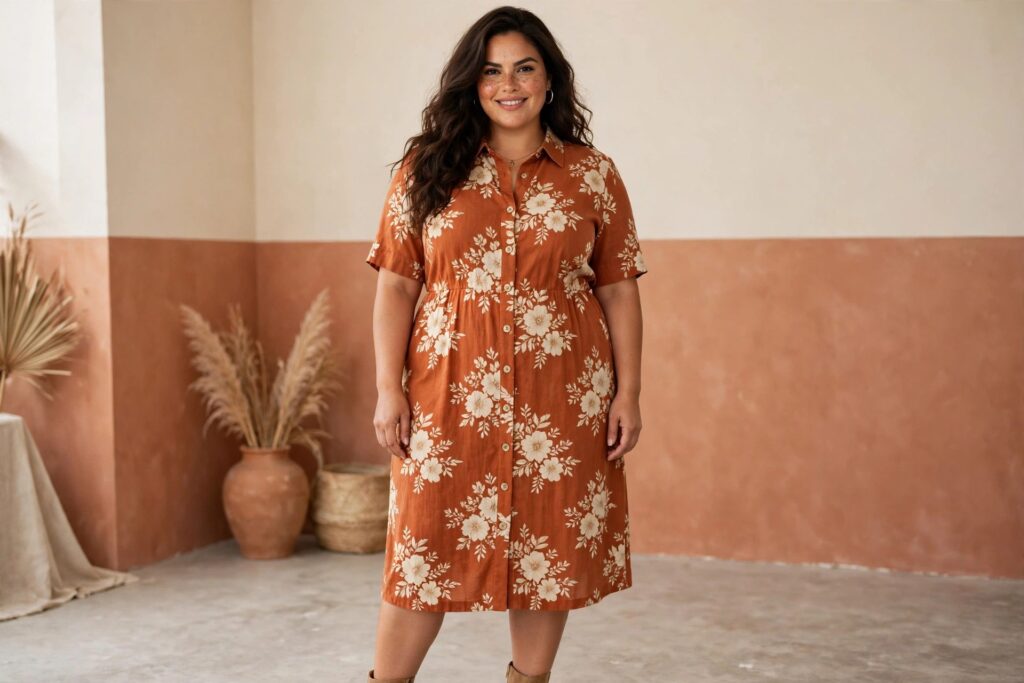
A plus-size shirt dress stays comfortable all day when three things line up: a waist that sits where your waist actually is, fabric that breathes instead of clinging, and buttons that stay closed when you sit, reach, and move. Get those right and one dress handles the whole day.
👗 What makes a shirt dress comfortable from morning to night?
Comfort comes from room in the right places, not from sizing up and hoping. Look for ease across the back and bust, a skirt that lets you take a full stride, and a waist seam or tie that lands on your natural waist. A dress that fits at 9 a.m. should still feel easy at 6 p.m.
That sounds simple. In practice, plenty of shirt dresses fail by lunchtime. The buttons pull when you sit down. The waist creeps up every time you stand. The fabric sticks to your thighs on a warm train.
None of that is your body misbehaving. It’s the cut. A shirt dress is built from a shirt pattern, and shirts are often graded up from smaller sizes without adding the ease a curvier body needs through the hip and tummy. So shop the details, not just the size label.
Start with the sit test, even if you’re ordering from your couch. Product photos won’t show it, but the description should mention a shaped waist, a fuller skirt, or extra room through the hip.
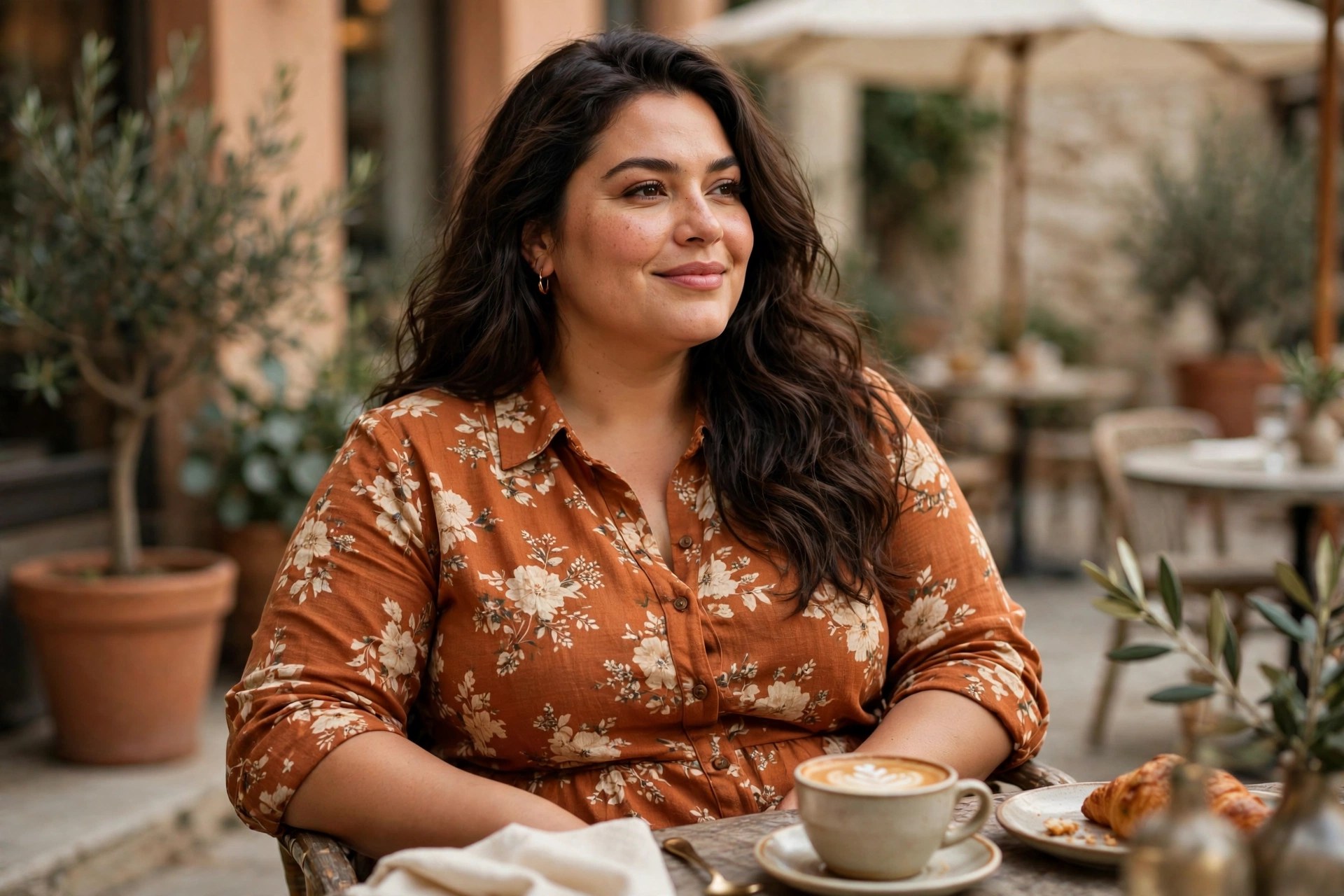
✨ How should a plus-size shirt dress fit at the waist and hips?
Your natural waist is the narrowest point of your torso, usually just above your belly button, and the dress should meet you there. If the waist seam or belt sits too high, the skirt pulls across your tummy. Too low, and the whole dress hangs like a sack and loses its shape.
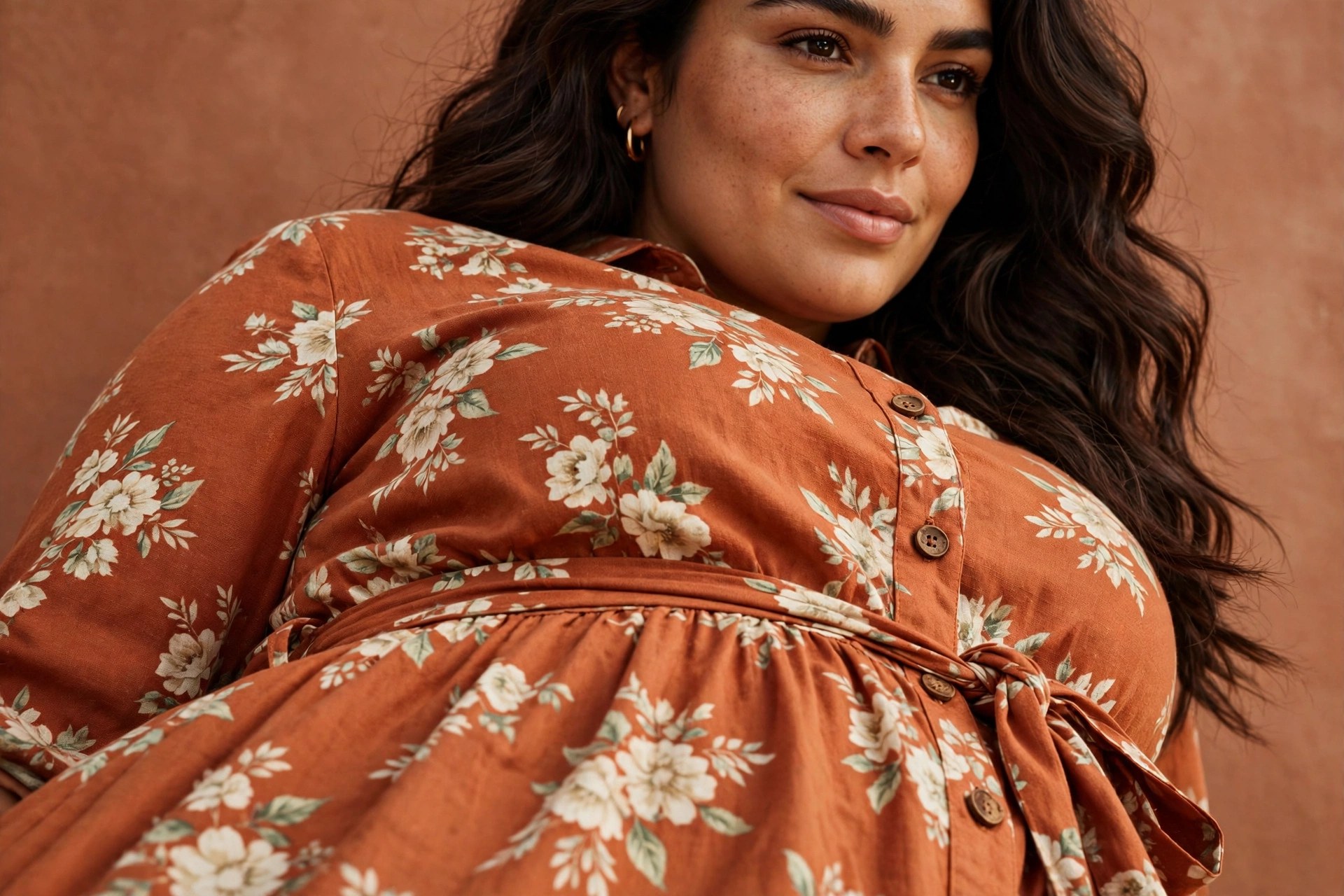
Try this quick check in the fitting room, or at home in front of a mirror. Bend from the waist and find the crease where your body folds. That’s your spot. Now check where the dress marks its waist. Close? You’re good. A few centimetres off? A soft tie belt can bridge the gap, because you can knot it exactly where you need it.
Through the hips, you want drape, not grip. The skirt should skim and fall away. If the fabric outlines every curve and tugs when you walk, the hip is too snug, and it’ll ride up all day. A-line and gently flared skirts are forgiving here. Straight, narrow skirts are the usual troublemakers.
And the buttons. Oh, the buttons. Sit down in the dress before you commit. Cross your legs. Reach for something on a high shelf, at least in your imagination. If the placket gaps at the bust or belly, look for a style with closer button spacing, a hidden snap, or a partial placket that only opens at the top.
🧵 Which fabric keeps a shirt dress comfortable all day?
Breathable natural fibres win for long days. Cotton and cotton-linen blends let air move, absorb a bit of perspiration, and soften with washing. Viscose and rayon drape beautifully and feel cool on skin, though they crease more. A small amount of stretch woven in — look for elastane on the label — helps the dress move with you.
Heavy polyester is the one to treat with caution. It traps heat, holds odour, and can feel clammy by mid-afternoon. A light polyester has its place on a travel day, since it shrugs off creases, but for an ordinary long day at your desk or out with friends, natural fibres are kinder.
Here’s the short version, side by side:
| Fabric | Breathability | Creasing | Best for |
|---|---|---|---|
| Cotton | High | Moderate | Everyday wear, warm offices |
| Cotton-linen blend | Very high | Higher, softens as you wear it | Hot days, holidays, outdoor plans |
| Viscose / rayon | High | Moderate to high | Dressier days, evening plans |
| Polyester | Low | Very low | Travel days when creases are the enemy |
Weight matters too. A flimsy fabric shows every line of your underwear and clings to your legs. A mid-weight weave holds its shape, skims your body, and still feels light. Hold the dress up to the light in the shop. If you can see your hand clearly through one layer, expect it to be clingy on you.
👚 Sleeves, pockets, and the small stuff that adds up
Sleeves decide more comfort than people expect. A sleeve that ends at the elbow or just above it gives you coverage without bulk, and it won’t fight with a cardigan later. Check the armhole, too. If you can’t lift your arm to hail a bus or grab a rail, the shoulder is cut too tight, no matter how lovely the print is.
Pockets? Non-negotiable, if you can find them. Real pockets — deep enough for a phone, not a decorative flap — turn a shirt dress into proper day wear. Side-seam pockets sit flattest on a curvier hip.
Length is personal, so trust your own day. Knee-length or just below suits most plans and stays put when you sit. A midi gives more coverage and swish. Just make sure the hem doesn’t catch behind your knees when you walk, because you’ll tug at it a hundred times before lunch.
🛍️ Can one shirt dress really work from morning to evening?
Yes — that’s the whole charm of the style. The collar and buttons read polished for daytime, and the same dress softens fast with small swaps. Undo one button, push the sleeves up, swap trainers for a heeled sandal, add earrings you love. Two minutes, different mood, same comfortable dress underneath.
Layering helps it stretch across seasons, too. A fine knit underneath on a cold morning. A cropped cardigan or a denim jacket over the top when the evening cools. Because the dress already has shape at the waist, layers sit neatly instead of swamping you.
One honest note on prints. A floral like the rust-orange dress pictured here does a lot of quiet work: it softens the line of the placket, disguises a crease or two, and pairs with tan, cream, and denim already in your wardrobe. Solids are sharper and show fit issues more, so if you’re between two, the print is often the easier all-day wear.
Questions readers ask about shirt dresses
Can you sit comfortably in a shirt dress all day?
Yes, if the skirt has enough sweep and the buttons are spaced closely enough not to gap when you sit. Do a sit-down check before you keep a dress: sit, cross your legs, and lean forward. If nothing pulls or pops, it will handle a full day.
How do you stop shirt dress buttons gaping at the bust?
Choose styles with closer button spacing, a hidden snap between buttons, or a sewn-shut lower placket. A camisole underneath is a simple backup. If only the bust gaps while the rest fits, the dress is cut too straight for your shape, and a style with more bust shaping will serve you better.
Is a belt a good idea with a plus-size shirt dress?
A soft tie belt in the same fabric usually works best, because you can position it at your natural waist and loosen it after lunch. Wide, stiff belts can dig in when you sit. If the dress has belt loops in the wrong place, ignore them and tie the belt where your waist actually is.
What shoes work best with a plus-size shirt dress?
Clean trainers keep it casual, flat sandals suit warm days, and a low block heel dresses it up without punishing your feet. Ankle boots work well with midi lengths in cooler weather. Pick the shoe for the day you actually have, not the day in the photo.
Your all-day dress, sorted
So, the checklist is short. Waist in the right place. Skirt that skims. Buttons that behave when you sit. Fabric that breathes. Pockets, if you’re lucky.
Find a shirt dress that ticks those boxes and you’ll stop saving it for short outings. It’ll become the dress you reach for on the long, full, ordinary days — which, let’s be honest, are most of them.
This article was created with AI assistance and reviewed by our editorial team before publishing.